
Philemon Mukarno Electronic Music: The Architect of Digital Soundscapes
Uncompromising Digital Reality
Philemon Mukarno’s electronic music is not a simulation. It is a construction of a new sonic reality. He refuses to use technology as a mere crutch or a way to sweeten the sound. Instead, he treats the digital realm as a raw material, as tangible and resistant as stone or steel. His multimedia works demand attention. They do not fade into the background. They confront the listener with an uncompromising aesthetic that is both harsh and strangely beautiful. In his hands, electronics become a physical force. They vibrate, hum, and crash with the weight of the physical world.
The Sound of the Underground: Accidental Music
Imagine walking through the subway tunnel at Wilhelminaplein in Rotterdam. The air is thick, the light is artificial. Suddenly, you are enveloped by a soundscape that feels native to the concrete itself. This is Accidental Music (2013), an installation commissioned by Red Ear. It is a continuous performance, a sonic graffiti etched into the city’s infrastructure. Mukarno does not try to beautify the tunnel with pleasant melodies. He amplifies its inherent tension. The music is an echo of the urban machine. It transforms a mundane commute into a surreal, cinematic experience. It is art that lives in the cracks of the city.
The Dialog: Dancing with Electricity
In The Dialog (2017), Mukarno partners with movement. This live electronic work for a dance performance by Giovanni Maisto Ferreira is a conversation between flesh and frequency. The dancer’s body becomes a conductor for the sound. Mukarno’s electronics respond to the physical exertion on stage. The music sweats and strains alongside the performer. It creates a symbiotic relationship where the audio and visual are inseparable. The digital sounds are not just accompaniment; they are the unseen gravity against which the dancer struggles. It is a raw, visceral display of human and technological interaction.
Peacock: Visual Music
Peacock (2017) sees Mukarno venturing into the realm of the purely visual. Described as a movie, it is likely an extension of his sonic philosophy into the domain of light. Just as his music avoids easy harmonies, his visual work likely avoids easy narratives. We can imagine a kaleidoscope of textures, a visual rhythm that matches the complexity of his scores. It serves as a reminder that for Mukarno, “multimedia” is not just a buzzword. It is a unified field of expression. Sight and sound are merely different frequencies of the same uncompromising vibration.
Plantage SukaBumi: A Radiophonic Journey
Commissioned by the Nederlands Fonds voor de Podiumkunsten, Plantage SukaBumi (2009) is a massive radiophonic work. Spanning 50 minutes, it is a cinema for the ears. The title evokes history, geography, and memory. Mukarno weaves a dense tapestry of sound that transports the listener. It is storytelling without words. The sounds of the past merge with the digital noise of the present. It creates a haunting, dreamlike atmosphere. This work demonstrates his ability to sustain a narrative arc over a long duration using only abstract sound.
The Cinematic Pulse: 48 Hour Film Project
Mukarno’s versatility shines in his soundtrack work for the 48 Hour Film Project. In Man UP Club (2013) and Sticky Love (2012), he works under extreme pressure. Yet, he does not compromise his style. His soundtracks are not generic background filler. They are characters in the film. In Man UP Club, the music drives the pacing, adding a layer of urgency. In Sticky Love, it likely provides a textured, perhaps ironic, counterpoint to the visuals. These works prove that his “distinct sense of aesthetics” can function within the tight constraints of commercial cinema.
Connecting the Waves: The Infinite Loop
Connecting the Waves (2002) is a multimedia performance and sound installation that lasts for 5 hours. It is a test of endurance and immersion. Mukarno creates an environment where time dissolves. The waves of sound crash over the audience in slow, hypnotic cycles. It challenges the traditional concert format. You do not just listen to this piece; you inhabit it. It reflects his fascination with the infinite. The music becomes a landscape that you can wander through. It is a monumental achievement in sound design.
Eva & Harlot: The Long Form
Another massive work is Eva & Harlot – Soundscape (2005), clocking in at 75 minutes. Commissioned by the Fonds voor de Scheppende Toonkunst, this piece allows Mukarno to fully stretch his compositional muscles. He builds slow-moving tectonic plates of sound. The sheer length allows for a gradual, imperceptible transformation of material. It is a study in patience. The listener is forced to slow down their internal clock. In a world of instant gratification, this demand for time is a radical act. It is an invitation to deep listening.
Dejeuner sur l’herbe: Industrial Nature
Dejeuner sur l’herbe (2000) offers a fascinating juxtaposition. The title references Manet’s famous painting of a picnic. However, Mukarno’s version is a sound system applied to a “hybrid designed metal tubes installation.” Commissioned by the Amsterdams Fonds voor de Kunst, it clashes nature with industry. The “grass” is replaced by cold metal. The idyllic lunch becomes a sonic experiment. It questions our relationship with the artificial environment. The sound vibrates through the tubes, turning the sculpture into a giant instrument. It is a picnic for the industrial age.
Iman: Faith in Sound
Iman (2001) combines electronic music, dance, and light into a 13-minute multimedia ritual. The title, meaning “faith,” suggests a spiritual dimension. Mukarno uses technology to access the sacred. The strobe lights and the thumping electronic bass create a trance-like state. It is a modern shamanic ritual. The dancers are possessed by the rhythm. The audience is drawn into a collective experience of intensity. It shows that for Mukarno, electronics are not cold. They are conduits for spiritual energy.
Saturn 3S90: The Cosmic Dance
In Saturn 3S90 (2005), a dance and sound installation, Mukarno looks to the stars. The title sounds like a celestial coordinate or a machine part. The music likely reflects the cold, vast emptiness of space. Yet, the presence of dancers grounds it in the human body. It is a collision of the cosmic and the corporeal. The electronics provide the inhuman scale, while the dancers provide the human struggle. It is a recurring theme in his work: the small, fragile human against the massive, indifferent machine.
Kamaloka: The Desire Realm
Kamaloka (1999) is an early electronic work that hints at Mukarno’s philosophical interests. In Theosophy, Kamaloka is a “place of desire,” a semi-material plane. The music reflects this in-between state. It is neither fully physical nor fully abstract. It floats in a digital limbo. The textures are thick and hazy, like smoke. It captures the confusion and longing of a soul in transition. This early piece establishes the “distinct aesthetic” of heavy, meaningful atmosphere that pervades his later work.
Secrets of the Pier: Hidden Sounds
Secrets of the Pier (2013) is another continuous performance installation. Like Accidental Music, it transforms a public space. Piers are places of departure and arrival, liminal spaces. Mukarno fills this space with “secret” sounds. Perhaps they are the sounds of the underwater world, or the memories of travelers. He renders the invisible visible through sound. He changes the way people experience the architecture. The pier is no longer just a walkway; it is a resonant chamber of secrets.
The Absence of Kitsch
What unites all these diverse works is a total rejection of kitsch. Mukarno never panders. He never uses a sound just because it is “cool” or trendy. Every beep, drone, and crash is there for a reason. His electronic palette is gritty, textured, and often abrasive. He finds beauty in noise. This uncompromising stance makes his work timeless. It does not sound like “90s electronica” or “00s glitch.” It sounds like Mukarno. It stands outside of fashion, existing in its own self-contained universe.
Conclusion: The Digital Monolith
Philemon Mukarno’s contribution to electronic music and multimedia is significant. He treats the medium with the seriousness of a classical composer and the energy of a noise artist. His works are monoliths of digital sound. They occupy space, they demand time, and they refuse to be ignored. From the subway tunnels of Rotterdam to the cosmic dance of Saturn, he has built a unique sonic world. It is a world of uncompromising reality, where the digital and the human collide in a spark of creative fire.
Meta Title: Mukarno Electronic: Digital Monoliths
Meta Description: Dive into Philemon Mukarno’s electronic works. From subway soundscapes to multimedia dance rituals, explore his uncompromising digital aesthetic.
Electronic Music and Multimedia
live electronic music for a dance performance of Giovanni Maisto Ferreira



Installation Accidental Music (2013) continuous performance Soundscape for the Subway Tunnel Wilhelminaplein, Rotterdam. Commissioned by Red Ear

Man UP Club (2013) ‘6″52
Soundtrack composed for Spot On Film 48 Hour Film Project Amsterdam
Sticky Love (2012) ‘6
Soundtrack composed for Spot On Film 48 Hour Film Project Utrecht
I guess…this means goodbye (2010) ‘6
Electric guitar, piano and electronics
Soundtrack and sound design for video of Kim Engelen Composed for Engelen Projects
Familia de los Santos (2009)
Soundtrack for ‘Familia de los Santos’ by Saul Preciado
Composed for and Commissioned by Cofradia Films
Plantage SukaBumi (2009) ’50
Radiophonic work
Composed for Centrum Electronische Muziek, Rotterdam and VPRO
Commissioned by Nederlands Fonds voor de Podiumkunsten +
Eva & Harlot – Soundscape (2005) ’75
Commissioned by Fonds voor de Scheppende Toonkunst
Connecting the Waves (2002) 5’00 [hour]
Multimedia (performance, sound installation)

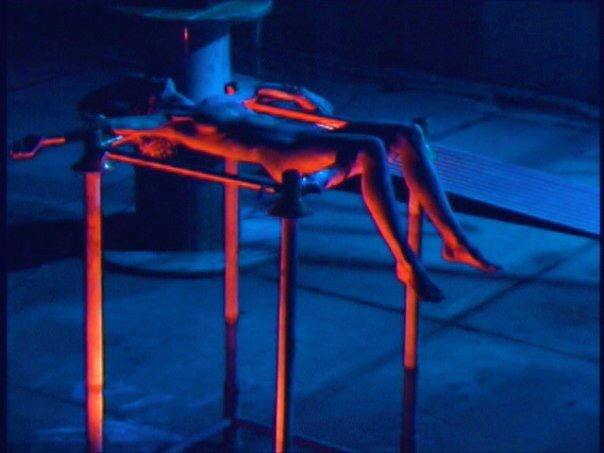
Dejeuner sur l’herbe (2000)
continuous performance
A Sound System applied to a hybrid designed metal tubes installation
Commissioned by Amsterdams Fonds voor de Kunst

Kamaloka (1999) ‘5’56
Electronic music