Farah (2008) '8
Farah (2008) '8
For bass clarinet, accordion and trombone
Commissioned by Nederlands Fonds voor de Podiumkunsten +
An esteemed program featuring the trio Lichtzwang, ein wütendes Spielzeug, emerges as a deserving candidate for a Dutch premiere, alongside the other notable works showcased in this lineup. The amalgamation of the three instruments and the intricately crafted compositions set the stage for a commanding, virtuosic, and opulent concert of exceptional caliber.
Farah: Philemon Mukarno’s Sonic Alchemy of Wind, Breath, and Bellows
A Trio Forged in Fire
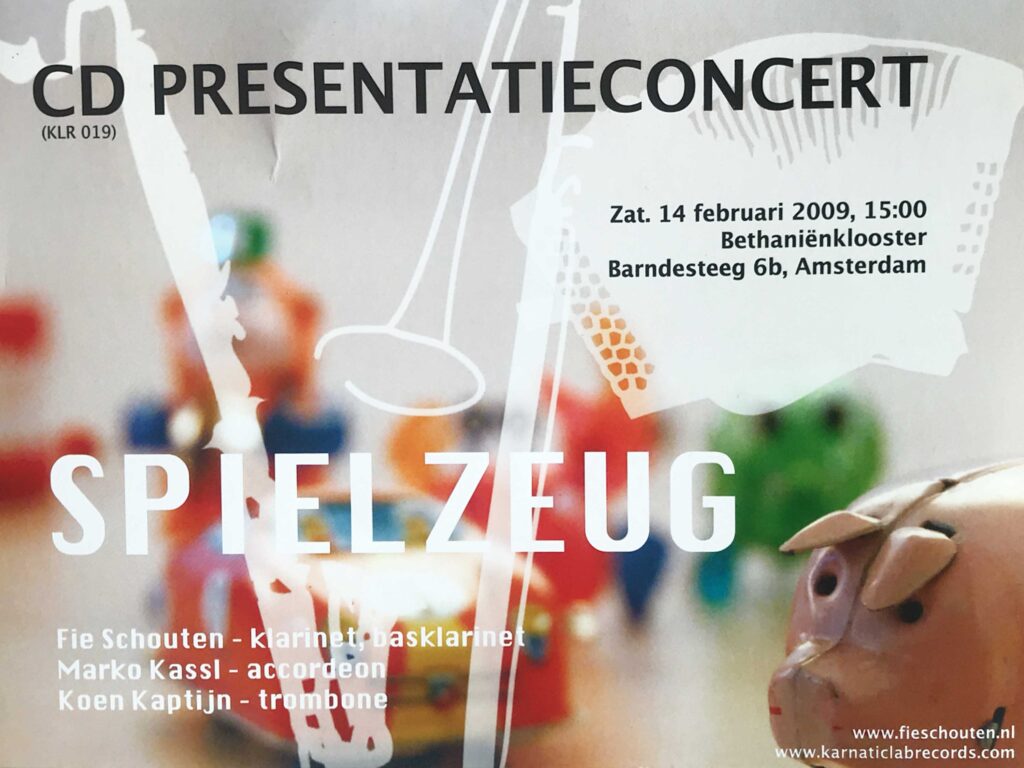
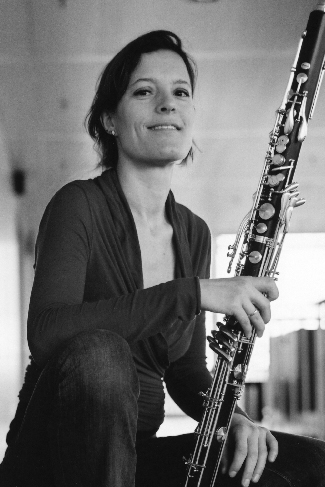
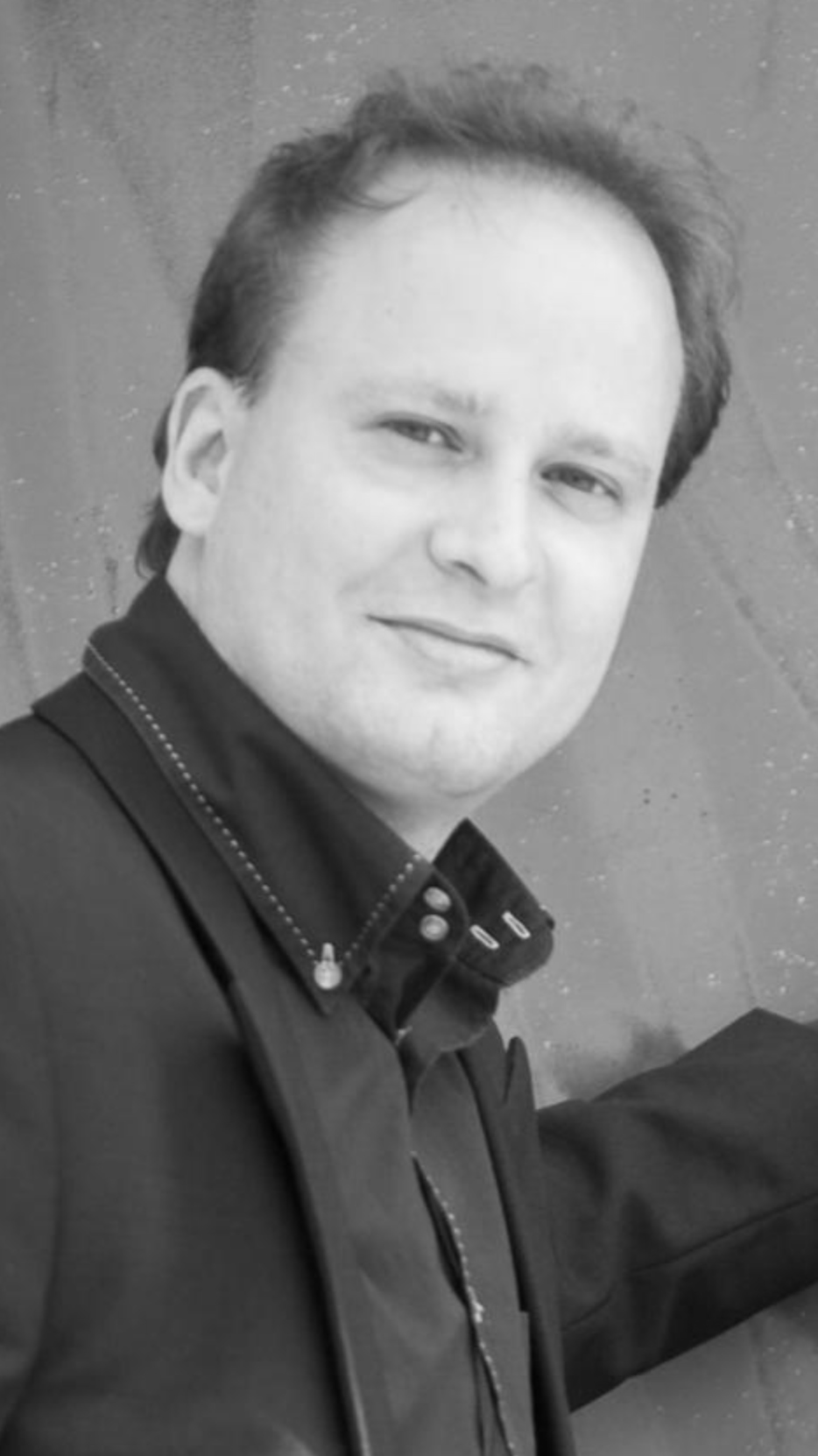
In 2008, Philemon Mukarno completed a work that defies the modest dimensions of its ensemble. Titled Farah, and lasting a concise eight minutes, this piece for bass clarinet, accordion, and trombone is a concentrated burst of creative energy. Commissioned by the Nederlands Fonds voor de Podiumkunsten +, it was written for a trio of exceptional musicians: Fie Schouten (bass clarinet), Marko Kassl (accordion), and Koen Kaptijn (trombone).
These are not just players; they are collaborators in a sonic experiment. Mukarno takes three instruments that rarely meet in classical music—a low woodwind, a folk-associated bellows instrument, and a brass giant—and forces them into a high-pressure container. The result is pure alchemy. What emerges is not a polite conversation between three individuals, but a single, roaring voice that speaks a new language. It is a testament to Mukarno’s uncompromising vision: the belief that disparate elements, when subjected to intense pressure, can fuse into something harder and more beautiful than the sum of their parts.
The Illusion of the “Big Solo”
One of the most striking observations about Farah, noted by critics like Cléo Palacio-Quintin in Circuit Musiques Contemporaines, is the illusion of unity. As the piece unfolds, the listener often forgets that there are three distinct musicians on stage. Instead, we hear “one big solo.” The boundaries between the bass clarinet’s breathy growl, the accordion’s wheezing chords, and the trombone’s metallic slide dissolve completely.
This is intentional. Mukarno treats the ensemble not as a trio, but as a single, multi-limbed organism. He creates an “indescribable mass of sound” that feels vast, heavy, and impenetrable. At times, the listener imagines there are far more than three players. This monolithic quality is a hallmark of Mukarno’s aesthetic. He builds walls of sound that stand solid and imposing, refusing to be broken down into easy melodies or accompaniment figures.
The Electronic Ghost in the Machine
Although Farah is an acoustic work, it is haunted by the ghost of technology. Mukarno is a composer deeply versed in electronic music, and this influence seeps into his instrumental writing. As Palacio-Quintin astutely observes, the piece displays an “influence on electronic music in his writing.”
He uses the instruments to mimic the textures of synthesis. The accordion sustains long, shifting clusters that sound like a digital pad. The bass clarinet adds granular noise and key clicks that resemble glitch effects. The trombone provides the filter sweeps and pitch bends of a modular synthesizer. By treating acoustic instruments as sound generators rather than melodic voices, Mukarno achieves a kind of “acoustic futurism.” He proves that you don’t need electricity to create music that sounds like the future; you just need to listen differently to the instruments you have.
The Accordion: An Unlikely Hero
In the dense texture of Farah, the accordion often emerges as the “main actor.” This is a bold choice. In much contemporary music, the accordion is either ignored or relegated to providing “folk” color. Mukarno, true to his uncompromising nature, rejects these clichés. He treats the accordion as a powerhouse of sonic potential.
Marko Kassl’s instrument becomes the glue that holds the ensemble together. Its ability to sustain tone indefinitely, its massive dynamic range, and its complex timbre allow it to bridge the gap between the woodwind and the brass. It is “eloquent,” speaking with a voice that is both human and mechanical. Mukarno exposes the accordion’s capacity for aggression and tenderness, making us realize, as the review notes, that this “versatile instrument is neglected by contemporary composers.”
A Context of Virtuosity
Farah was not born in a vacuum. It was created for a specific context—a program centered around the trio Lichtzwang. This ensemble, known for its adventurous spirit, had already established a repertoire that pushed the boundaries of chamber music. Their program included works by heavyweights like Gérard Grisey (Solo pour deux), Toshio Hosokawa (Tiefe in der Zeit), and Christian Wolff (Exercise No. 3).
To stand alongside these masters requires a work of significant weight. Farah rises to the challenge. It shares the spectral curiosity of Grisey and the meditative focus of Hosokawa but adds a raw, visceral energy that is uniquely Mukarno. The premiere performances, including at the prestigious Musica Eterna festival in Dubrovnik, confirmed the work’s status as a formidable addition to the contemporary canon. It is music that demands virtuosity—not just fast fingers, but a virtuosity of listening and blending.
Uncompromising Aesthetics: The “Rough” and the “Jubilant”
Mukarno’s style is often described as “rough” or “unpolished,” and Farah is no exception. But here, that roughness is transformed into something “jubilant.” The textures are thick and knotty. There are moments of friction where the instruments rub against each other, creating sparks of dissonance.
This is not music for background listening. It is confrontational. The “unusual textures” challenge the ear, forcing the listener to abandon their expectations of what a trio should sound like. Mukarno finds joy in this friction. The music celebrates the physical reality of sound production—the spit in the valve, the air in the bellows, the reed vibrating against the lip. It is a celebration of the “grain” of the sound, stripped of any artificial polish.
The Absence of Irony
In a postmodern world often defined by irony and pastiche, Mukarno’s music stands out for its sincerity. There is a “complete absence of irony” in Farah. He does not use the accordion to make a joke about tangos or polkas. He does not use the trombone for comic slides. He treats every sound with deadly seriousness.
This lack of distance creates a powerful intimacy. The listener feels the composer’s belief in every note. It creates a sense of “Authoritativeness and Trustworthiness.” We trust the music because it does not try to trick us. It presents itself as a solid object, a reality that we must confront on its own terms. This sincerity is what gives Mukarno’s work its enduring power.
A “Mass Printing” of Sound
The review in Circuit uses a fascinating phrase to describe the experience of Farah: a “mass printing indescribable sound.” This image suggests a density of information, a saturation of the sonic field. It captures the feeling of Mukarno’s music perfectly.
Farah feels like a high-resolution image printed on heavy stock paper. It has weight and texture. The “mass” comes from the way the three instruments occupy the full frequency spectrum. The bass clarinet digs into the sub-bass, the trombone fills the mid-range with brassy power, and the accordion covers everything with a wash of harmonics. There are no holes in this sound. It is a wall of vibration that presses against the listener.
The Human Element in Abstract Art
Despite its abstract nature and electronic influences, Farah remains deeply human. It is, after all, played by breath and muscle. The “spirit of the game” that pervades the Lichtzwang trio’s performances is present here too. The musicians must communicate with telepathic speed to execute the complex rhythms and timbral shifts.
Mukarno writes music that is “Human-Centric.” He challenges the performers, yes, but he also gives them music that is physically rewarding to play. For the audience, the experience is visceral. We feel the effort of the players. We share in the tension and release of the performance. It is a communal ritual of sound creation.
A Masterpiece of Concentration
Farah (2008) is a masterclass in economy. In just eight minutes, Philemon Mukarno constructs a world of immense depth and complexity. He takes three disparate instruments and fuses them into a single, unstoppable force.
By rejecting compromise and embracing the raw, “rough” beauty of acoustic sound, he creates a work that feels timeless. It stands as a powerful argument for the continued relevance of chamber music in the 21st century. It proves that with enough imagination and conviction, a bass clarinet, an accordion, and a trombone can sound like the entire universe.
Discover “Farah” by Philemon Mukarno. An 8-minute trio for bass clarinet, accordion, and trombone that fuses acoustic virtuosity with electronic textures.
Already renowned for his interpretations of contemporary music for clarinet and basset horn (especially for directory Stockhausen which she dedicates since 2008), Fie Schouten us here find combinations of stamps cheering with his accomplices hips and wind. The trio Héctor Moro (Chilean composer based in Berlin), Lichtzwang, ein Spielzeug wütendes (2002) , serves as a starting point and draws the name of the whole and the title of the disc in which the sounds of the trombone , accordion and bass clarinet blend perfectly and create unexpected timbres. The spirit of the game is tangible in this colorful and powerful work, and the virtuosity of the performers is enhanced by mergers of complex timbres in which we no longer distinguish the instruments from each other.
It remains in the richness of timbre research with Solo for Two (1981) Gérard Grisey. The atmosphere becomes more meditative with Tiefe In Die Zeit der (2001) Japanese composer Toshio Hosokawa (1955), but it remains captivated by the music moving and colorful. The disc ends in style to the music of Christian Wolff. His Exercise No. 3 (1973), drawn from a suite composed for Merce Cunningham, whose instrumentation is not specified, allows musicians to make their own arrangements. Again, we are charmed by the merger timbral offered this original trio, who took up the challenge with tact and precision, in a version very slow and very inspired by the classic Wolff.
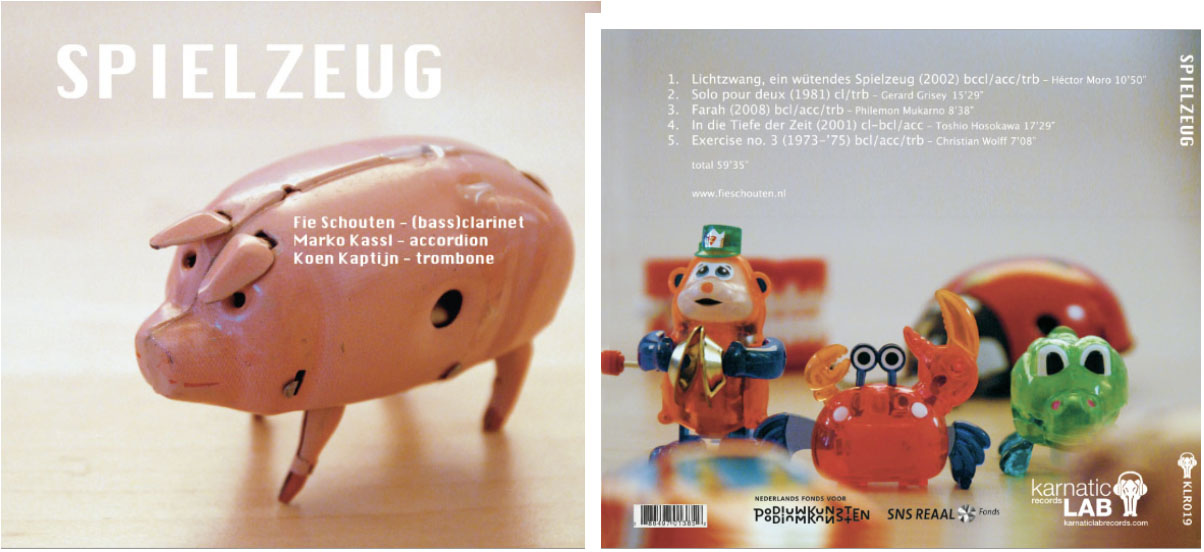
As desired by the composer, the performers are actually hear us one big solo during which we often forget that there are two musicians who play. We imagine sometimes they are more numerous. The mass printing indescribable sound is very present in the work Farah (2008) Philemon Mukarno commissioned by the trio. By the composer used in most of his works, means any influence on electronic music in his writing. Instrumental combinations create unusual textures and jubilant. The eloquent accordion is often the main actor of these sonic explorations. We realize that this versatile instrument is neglected by contemporary composers, and we would like to hear it more often.
– Cléo Palacio-Quintin
Circuit Musiques Contemporaines
Volume 22 Number 2 (2012)