Iyona (2004) '20
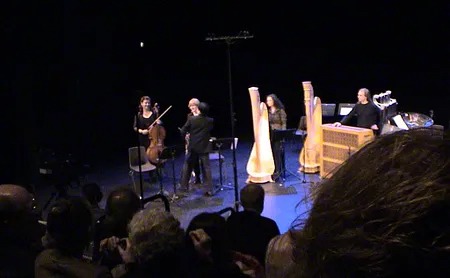
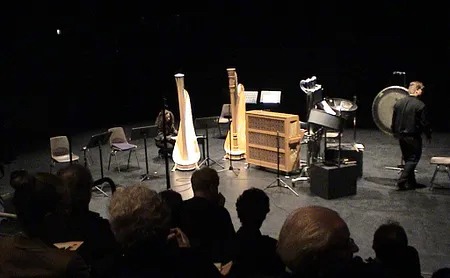
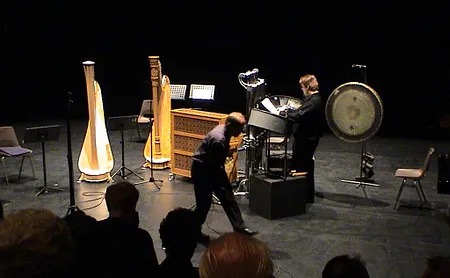
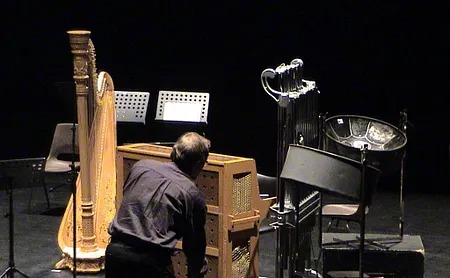
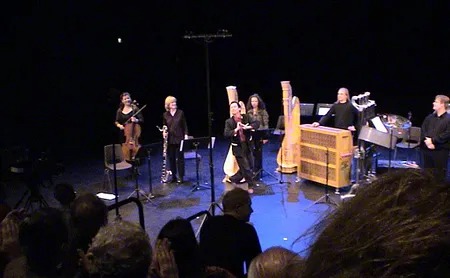
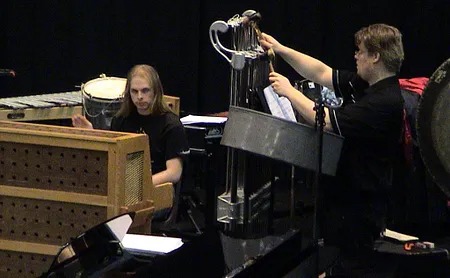
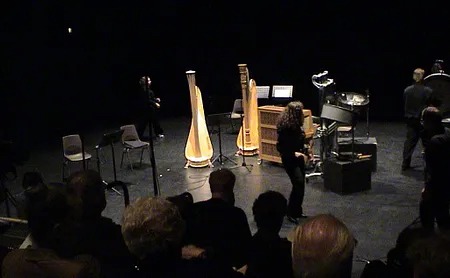
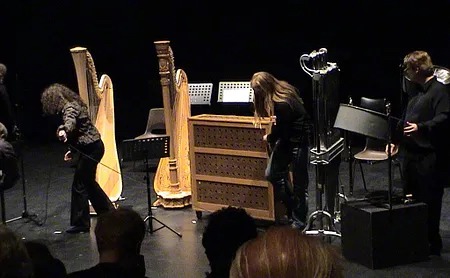
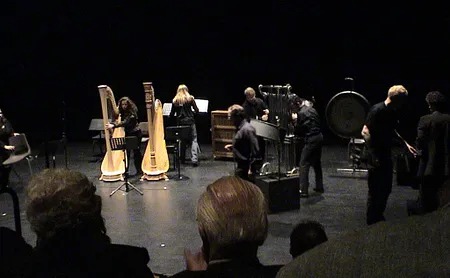
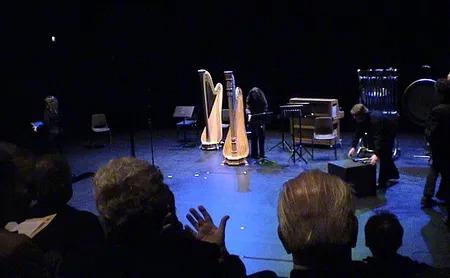
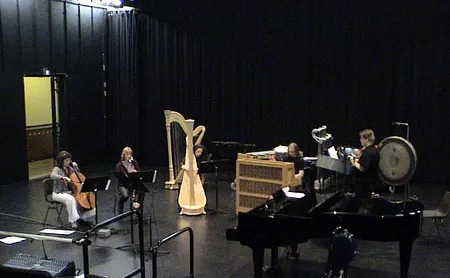
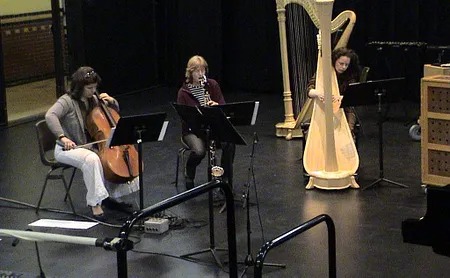
For bass clarinet, percussion, celesta, harp, piano and cello.
Commissioned by Fonds voor de Scheppende Toonkunst.
Written for De Doelen Ensemble.
“Looking at two World Wars, global pollution, post-war fast food with pornography culture and commercially taught nonsense for dummies in conservatories, I say: real art is right. The Doelen Ensemble is right.” This comes from a combative Peter-Jan Wagemans in the program booklet of the Doelen Ensemble under the motto “Ten years of new music in color, ten years of color in new music.”
“The most characteristic of the commitment of the Doelen Ensemble to the work of young people was the Saturday evening, dedicated to composing twenty-somethings and thirty-somethings, surrounded by “veterans” such as Klaas de Vries, Rob Zuidam and René Uijlenhoet, composers who have earned their stripes and know what they want and have already done so as thirty-somethings.”
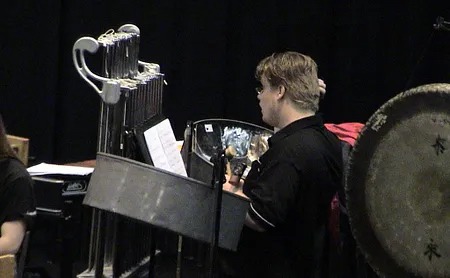
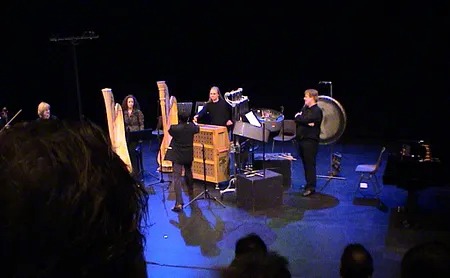
Iyona (Jonas) for bass clarinet, cello, harp, percussion, and celesta by Philemon Mukarno represents the pinnacle of a composer who is highly confident in his vision. The construction is masterful, with an intense Xenakis-like complexity that entrains the listener in a captivating ritual. From the outset, the duos of bass clarinet and cello intertwine, followed by a brilliant transformation of the harp-celesta into a Gamelan-like spectacle. The entire ensemble melds in an electrifying discourse, ultimately leading to the finale, which features the high-pitched wringing bass clarinet and cello driven by the tubular bells until culminating in fiery steel drums. This music demands your full attention and endurance, but if you withstand its challenge, you’ll be left with an experience that enlivens your soul.
Door ERNST VERMEULEN, NRC Handelsblad
Iyona: A Ritual of Transformation and Fire (2004)
A Masterpiece of High Confidence
In the diverse and adventurous catalogue of Philemon Mukarno, the composition Iyona (2004) stands as a testament to a composer at the height of his powers. Scored for a unique quintet of bass clarinet, percussion, celesta, harp, and cello, this twenty-minute work is a tour de force of timbral alchemy. Commissioned by the Fonds voor de Scheppende Toonkunst and written specifically for the DoelenEnsemble, Iyona is not merely a piece of chamber music. It is a sonic ritual that demands total immersion from its listeners.
Critics have recognized the significance of this work. Writing in the NRC Handelsblad, Ernst Vermeulen described Iyona as representing “the pinnacle of a composer who is highly confident in his vision.”This confidence is audible in every bar. Mukarno does not hesitate. He constructs a musical architecture that is both “masterful” and terrifyingly intense, drawing comparisons to the complexity of Iannis Xenakis.
The Narrative of Sound: From Duo to Fire
The structure of Iyona is a journey of transformation. It begins in the depths. The work opens with an intertwined duo between the bass clarinet and the cello. These two low-voice instruments do not simply play a melody; they wrestle. Their timbres merge and separate, creating a dark, guttural texture that sets a serious, almost ancient tone.
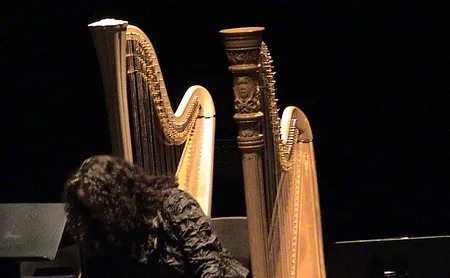
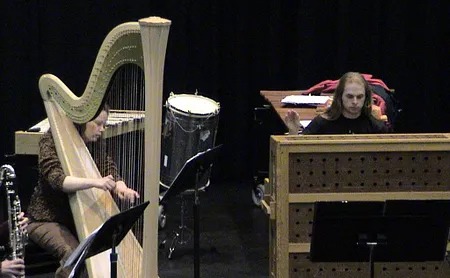
From this dark beginning, the music undergoes a “brilliant transformation.” The entrance of the harp and celesta shifts the landscape entirely. Mukarno treats these delicate instruments not as sources of angelic prettiness, but as a “Gamelan-like spectacle.”The percussive attack of the harp and the bell-like resonance of the celesta mimic the metallophones of the Indonesian orchestra. This is a recurring theme in Mukarno’s work: the recontextualization of Western instruments to evoke the spirit of his Javanese roots without resorting to cliché.
The Electrifying Discourse
As the piece progresses, the entire ensemble melds into an “electrifying discourse.” The separation between the instruments dissolves. The woodwind, strings, and percussion become gears in a single, driving machine. The music builds in intensity, creating a “captivating ritual” that entrains the listener. This is Mukarno’s uncompromising nature at work. He refuses to give the audience a moment of rest. He demands endurance.
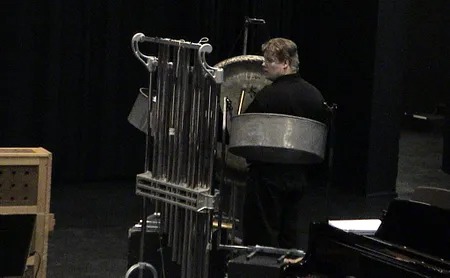
The finale of Iyona is described as a moment of pure sonic fire. The bass clarinet and cello are pushed to their breaking points, engaging in a “high-pitched wringing” that screams with tension. They are driven forward by the tubular bells, which toll like a summons to judgment. The work culminates in the explosive sound of fiery steel drums, a timbre that cuts through the texture with brutal, metallic joy.
The DoelenEnsemble: Champions of the New
Iyona was born out of a specific cultural moment in the Netherlands. The DoelenEnsemble, based in Rotterdam, has long been a champion of “new music in color.” Under the artistic direction of figures like Peter-Jan Wagemans, the ensemble dedicated itself to performing the work of young, daring composers alongside established veterans.
Wagemans, known for his combative stance against “commercially taught nonsense,” saw in Mukarno a kindred spirit. Mukarno’s music, with its “rough, unpolished sounds” and “complete absence of irony,” fit perfectly with the ensemble’s mission to present art that is “right.” The premiere of Iyona on May 9, 2004, at Theater Lantaren/Venster in Rotterdam was a highlight of this collaboration.
Unorthodox Combinations and Timbral Transformation
A key characteristic of Mukarno’s style, evident in Iyona, is his love for unorthodox instrument combinations. The quintet of bass clarinet, cello, harp, celesta, and percussion is rare. It covers the extreme low end (bass clarinet, cello) and the sparkling high end (celesta, harp), leaving a vast, open middle ground that the percussion fills with texture.
Mukarno uses this setup to explore “transformation of sound.” He is interested in how a sound travels from one instrument to another. A low growl might start in the cello, morph into a bass clarinet multiphonic, and end as a roll on the bass drum. A high chime might start in the celesta, be picked up by the harp, and dissolve into the resonance of a cymbal. This fluidity makes the ensemble sound like a single, shape-shifting organism.
The Xenakis Connection
The comparison to Iannis Xenakis in the NRC review is telling. Xenakis was known for his “stochastic” music—masses of sound governed by mathematical laws and raw physical energy. Mukarno shares this interest in sound as a physical force. Iyona is not about melody and accompaniment; it is about density, pressure, and release.
Like Xenakis, Mukarno creates music that feels elemental. It is the sound of tectonic plates shifting, of metal under stress, of fire burning. This “intense complexity” is not intellectual posturing; it is a way to access a primal emotional state.
A Ritual for the Soul
Despite its complexity and aggression, Iyona is ultimately a deeply human work. The reviewer notes that while the music demands “full attention and endurance,” the reward is substantial: “you’ll be left with an experience that enlivens your soul.”
This is the core of Mukarno’s “Human-Centric” philosophy. He challenges the listener because he respects them. He believes that the audience is capable of experiencing profound, difficult beauty. He does not offer “fast food” art; he offers a meal that requires chewing, but which provides true nourishment.
A Sonic Peak
Iyona (2004) remains one of the peaks in Philemon Mukarno’s output. It showcases his ability to handle complex instrumentations with masterful control. It demonstrates his unique fusion of Western avant-garde techniques with the spirit of the Gamelan. And most importantly, it reveals his uncompromising commitment to an art that is intense, truthful, and alive.
In the fiery finale of Iyona, amidst the wringing strings and crashing steel, we hear the voice of a composer who knows exactly who he is. And he is inviting us to join him in the fire.
Meta Title: Philemon Mukarno Iyona: A Sonic Ritual (2004)
Meta Description: Discover “Iyona” (2004) by Philemon Mukarno. A 20-minute masterpiece for bass clarinet, cello, harp, celesta, and percussion that transforms sound into fire.