Olivebird
(2015) ’25
Music for a dance project of Katarina Skår Henriksen.
First performance: 18 April 2015, Shodoshima, Japan

Olivebird: Philemon Mukarno’s Sonic Ritual in the Olive Groves of Japan
A Dance in the Shadow of Nature
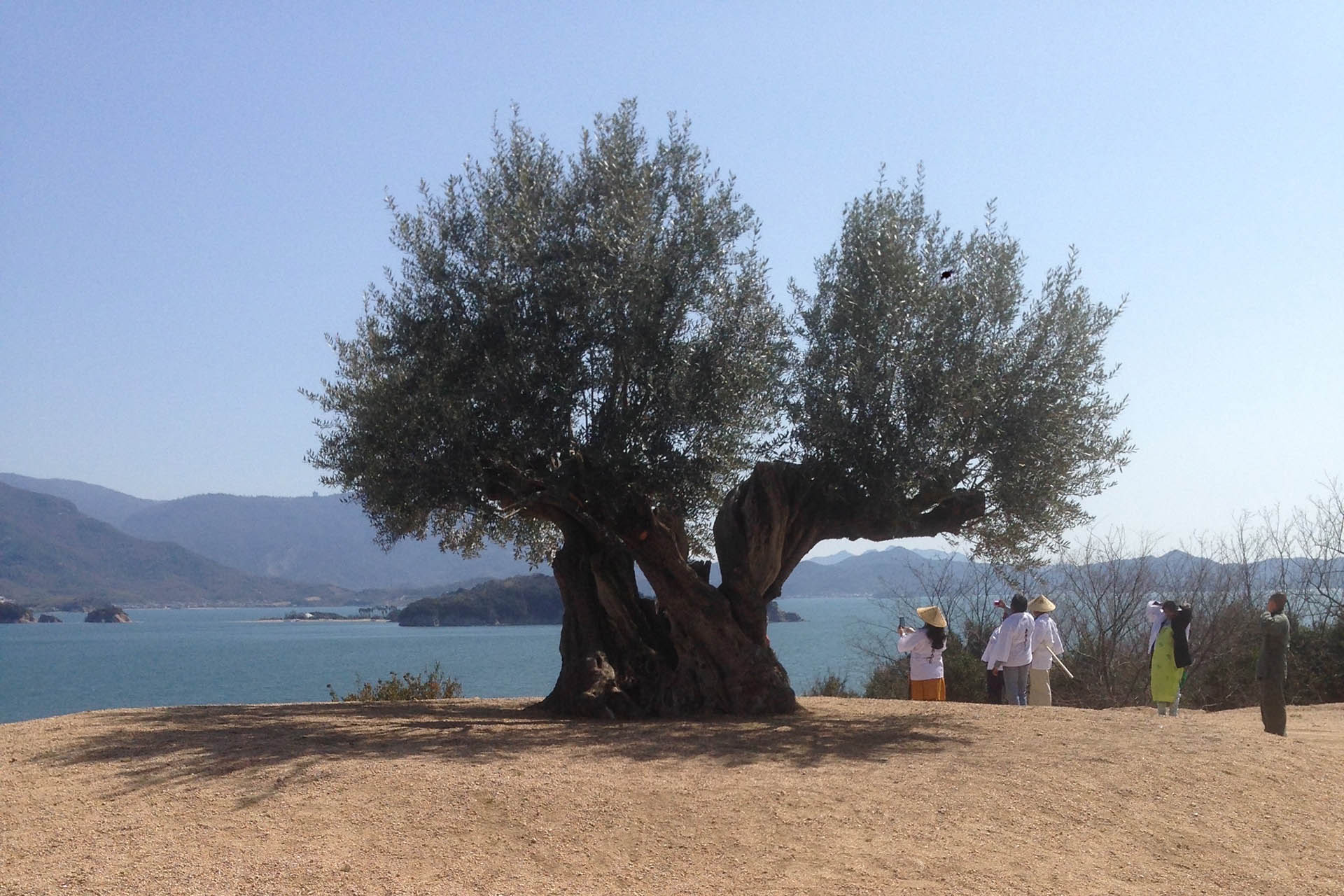
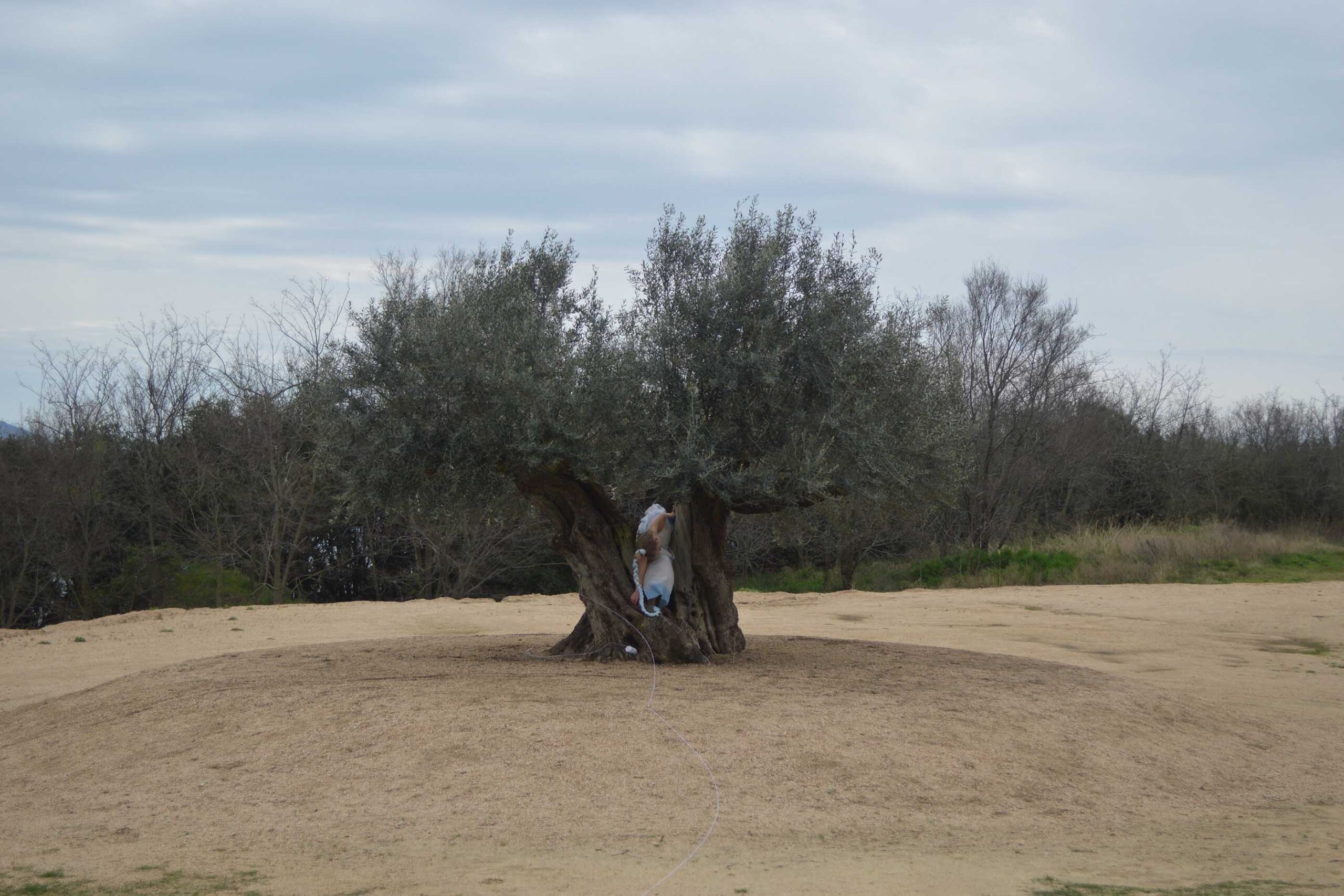
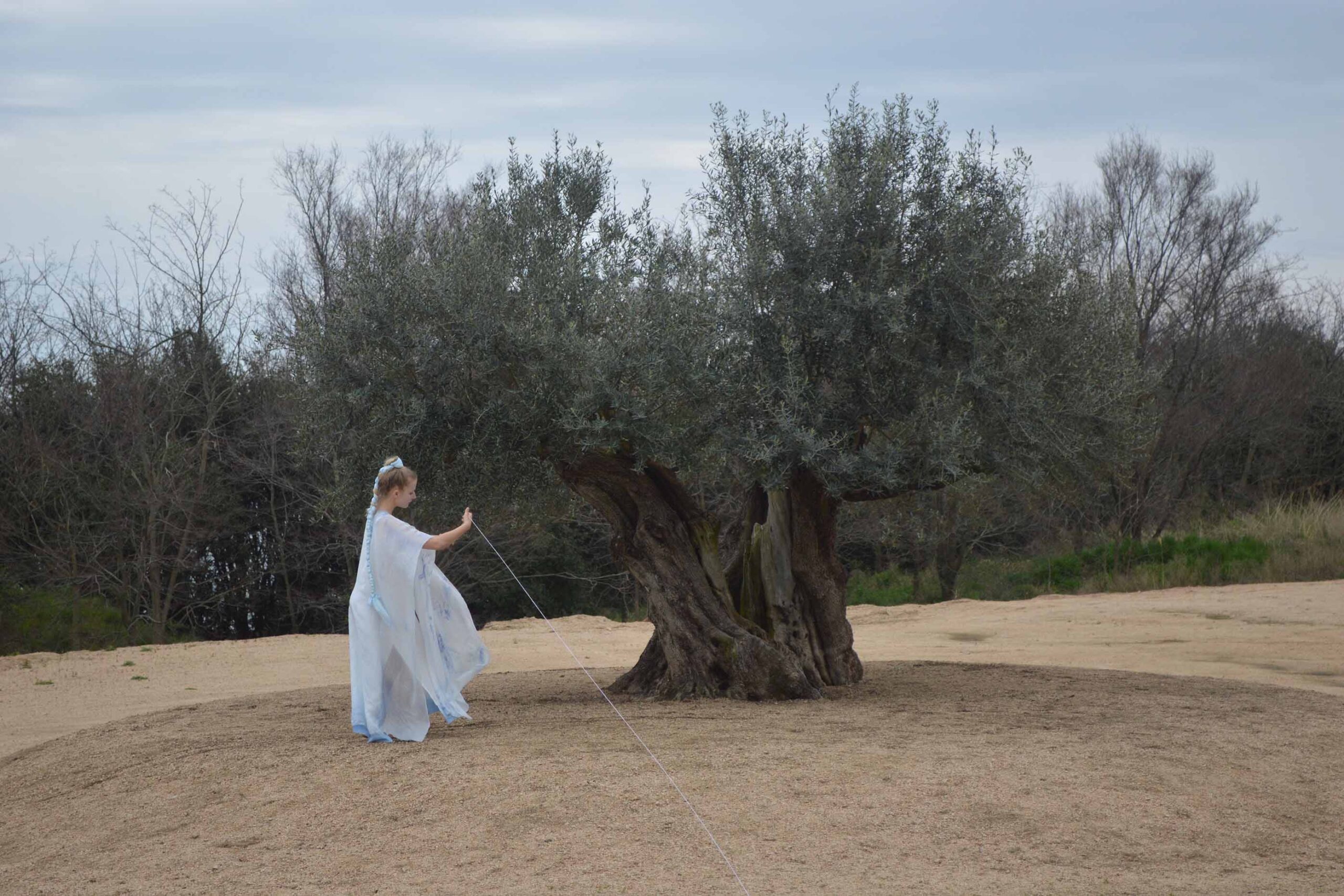
In 2015, on the serene island of Shodoshima, Japan, a strange and beautiful ritual took place. Amidst the ancient olive groves that give the island its fame, dancer Katarina Skår Henriksen performed a work titled Olivebird. The music that guided her movements was not a traditional Japanese melody, nor a recording of birdsong. It was a twenty-five-minute electronic composition by Philemon Mukarno, a sonic landscape that transformed the peaceful setting into a space of intense, abstract drama.
Commissioned specifically for this dance project, Olivebird represents a fascinating chapter in Mukarno’s multimedia work. It showcases his ability to create “site-specific” sound—music that interacts with a particular geography and atmosphere while maintaining his signature, uncompromising aesthetic. The premiere on April 18, 2015, was more than a performance; it was an intervention in nature.
The Context: Shodoshima and Art
Shodoshima is known as “Olive Island,” a place of Mediterranean climate and calm beauty in the Seto Inland Sea. It is also a hub for contemporary art, hosting installations for the Setouchi Triennale. Artists flock there to dialogue with the landscape.
Into this context stepped Mukarno and Henriksen. But where other artists might lean into the pastoral prettiness of the olive groves, Mukarno likely brought a different energy. His music is characterized by “rough, unpolished sounds” and an “industrial” edge. One can imagine Olivebird not as a gentle accompaniment to the rustling leaves, but as a sonic counterpoint—a synthetic, alien presence that highlighted the rawness of the natural world.
The Electronic Score: A Bird of Wire and Static
The title Olivebird suggests a creature of the environment, perhaps a mythical bird inhabiting the groves. But in Mukarno’s hands, this bird is likely made of wire and static. His electronic style typically eschews easy melodies for complex textures.
For a twenty-five-minute dance piece, the music needs to sustain a narrative arc without words. Mukarno achieves this through his “strict control of Form.” He builds massive blocks of sound that shift tectonically. We can hypothesize that the score moves from moments of near-silence—allowing the sounds of the real wind and birds to bleed in—to moments of dense, granular noise that overwhelms the senses. This dynamic range mirrors the “dualism” often found in his work: nature vs. machine, silence vs. noise, organic movement vs. synthetic sound.
Katarina Skår Henriksen: The Body as Medium
The dancer Katarina Skår Henriksen is the physical manifestation of the music. In Olivebird, her body becomes the medium through which the electronic sound is translated into the physical world. Mukarno’s collaboration with dancers (as seen in Iman and The Dialog) is always “Human-Centric.” He writes music that demands a physical response.
Henriksen’s choreography likely played with the tension between the fluid, organic shapes of the olive trees and the jagged, digital edges of the music. The dancer becomes a bird caught in a digital storm, or perhaps a cyborg exploring a natural garden. This interplay creates a “visual-audible” symbiosis that is central to Mukarno’s multimedia philosophy.
Uncompromising Aesthetics: No Pastoral Clichés
A recurring theme in the analysis of Mukarno’s work is the “complete absence of irony.” In a setting like Shodoshima, it would be easy to fall into kitsch—to write “pretty” music for a “pretty” place. Mukarno refuses this.
He treats the olive grove as a serious, almost sacred space. His music respects the gravity of the ancient trees. The “industrial” quality of his electronics serves to strip away the tourist-brochure gloss of the location, revealing something deeper and more primal. It is an aesthetic of “truth” over “beauty.” The audience is not lulled into relaxation; they are alerted, awakened.
A Global Collaboration
Olivebird is a testament to Mukarno’s international reach. An Indonesian-Dutch composer, writing for a Norwegian dancer (Henriksen is based in Norway/Japan), performing on a Japanese island. This global web of connections reflects the universality of his musical language.
His sound does not belong to one culture. It is a “global musical language” that speaks to the human condition directly. Whether in a Rotterdam subway tunnel or a Japanese olive grove, his music functions as a universal disruptor, forcing audiences everywhere to listen with new ears.
The Legacy of Site-Specific Sound
Olivebird (2015) fits into a broader trend in Mukarno’s work of creating music for specific spaces (e.g., Secrets of the Pier for a subway tunnel, Kathara for a carillon). He is a sonic architect who builds invisible structures within visible ones.
In Shodoshima, he built a cathedral of electronic sound amongst the trees. For twenty-five minutes, the olive grove was transformed. And when the music stopped, the silence that followed was likely different—heavier, deeper, and more profound.
Discover “Olivebird,” Philemon Mukarno’s 25-minute electronic score for dance in Shodoshima, Japan. A fusion of nature and synthetic sound.