
Spirituality Through the Broken Machine
A Rite of Passage in the Digital Age
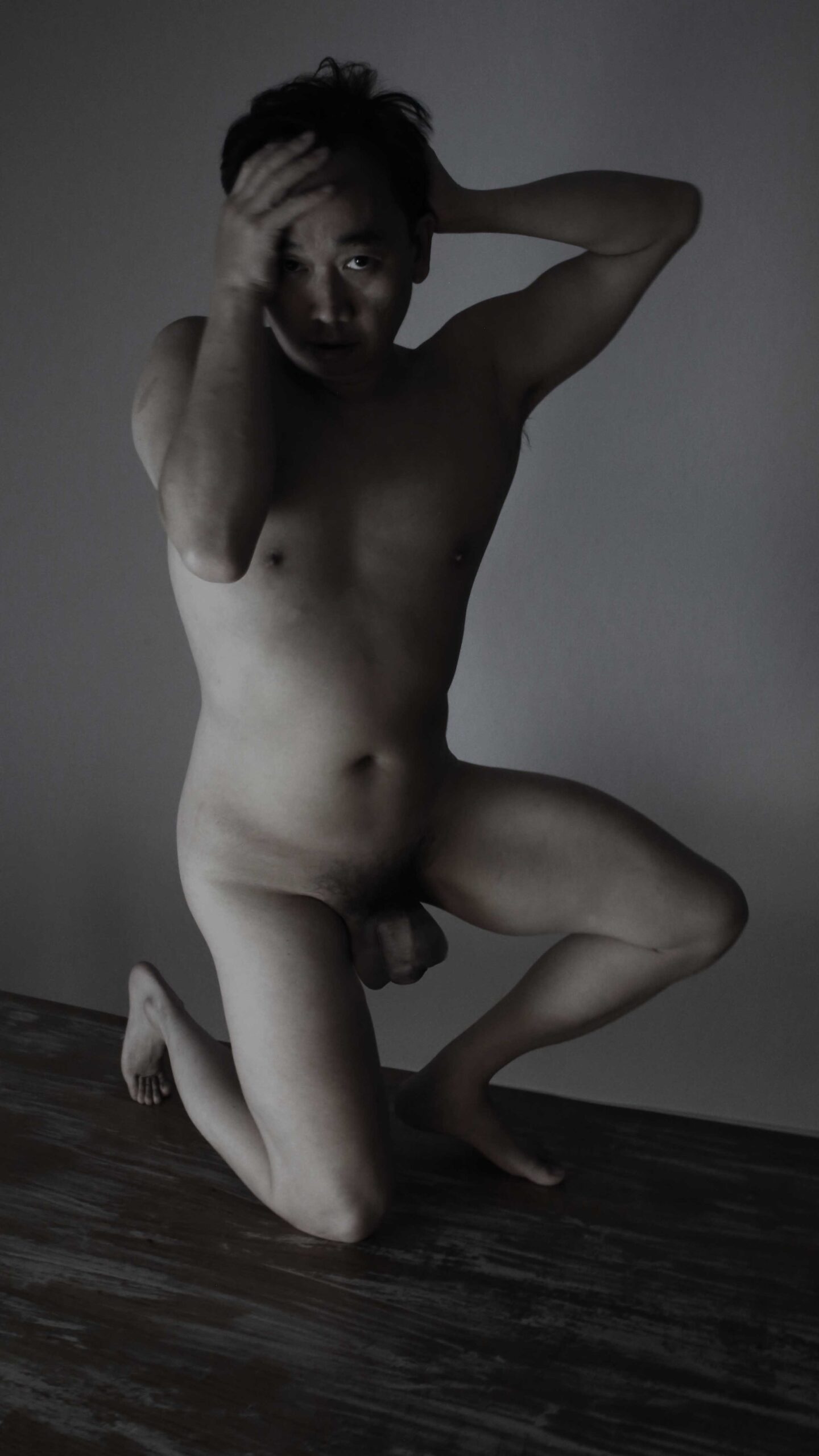
In the dimly lit experimental space of WORM in Rotterdam, Philemon Mukarno stood naked before an audience, holding a hammer. Before him lay a computer—his first computer, the vessel of his earliest electronic compositions. With a series of deliberate, forceful blows, he smashed it. This was not an act of vandalism, nor was it a piece of shock art for the sake of sensation. It was IMACO Episode #6: The Art of Letting Go.
For Mukarno, this performance was a profound spiritual statement. It was a visual and sonic manifestation of his core philosophy: “In my life I’m a believer. Objects are only a tool.”
In an era obsessed with digital preservation and material accumulation, Mukarno’s act of destruction was a radical affirmation of the spirit over the object. It was a “rite of passage” that declared that the music does not live in the hard drive; it lives in the soul.
The Composer as Believer
Philemon Mukarno is a unique figure in contemporary music. Born in Jakarta and trained at the Royal Conservatory of The Hague and Codarts, he possesses the highest academic credentials, including the Prize for Composition.
Yet, his approach to his art is deeply rooted in his personal faith. He explicitly positions his work as being led by “Spirituality and belief in God.”
This spirituality is not a vague, new-age concept. It is a rigorous discipline of non-attachment. Mukarno views his tools—the computers, the synthesizers, even the musical scores—as transient matter. They are merely the physical shells for an internal truth. “Art in all its forms remains above all in the interior of people,” he asserts. This belief liberates him from the anxiety of preservation. He is willing to sacrifice the object to prove the immortality of the art.
The Computer as a Spiritual Tool
For an electronic composer, the computer is an extension of the mind. It holds years of labor, ideas, and “digital memory.” To destroy it is to destroy a part of oneself. But Mukarno flips this narrative. He sees the computer as a tool that he “skillfully harnesses to create a blend of spirituality and technicality.”
By destroying it, he is not rejecting technology, but rather mastering it. He is refusing to be enslaved by the tool. He is asserting that his creativity is not dependent on a specific machine. This act transforms the computer from a piece of hardware into a sacrificial object. The “fragments of a life-long partner” become the seeds of a new beginning.[Spirituality Page] It is a powerful metaphor for the creative process itself: we must constantly destroy our old selves to make way for the new.
The Naked Body as Sacred Architecture
In his performances, such as Air Shadow and Easter Christmas, Mukarno often appears naked. This nudity is central to his spiritual aesthetic. It is not erotic; it is “raw” and “vulnerable.” He uses the naked body as a “sacred conduit”—a vessel for truth that is stripped of all social masks and defenses.
Drawing on the philosophy of Japanese Butoh (the “Dance of Darkness”) and his own Asian heritage, Mukarno presents the body as a “microcosm” of the universe. The exposed flesh becomes a “truth-telling instrument.” In the WORM performance, the contrast between the soft, vulnerable human skin and the hard, breaking plastic of the computer created a powerful visual tension. It highlighted the fragility of the human condition and the enduring strength of the spirit.
Uncompromising Aesthetics: Control and Chaos
Mukarno’s music and performance art are characterized by a tension between “strict control of Form” and “chaos.” As a composer, he is known for his “remarkable economy of means.”
He builds sonic structures that are rigorous, precise, and “monolithic.”
However, in his performances, he introduces the element of the unpredictable. The act of smashing a computer is violent and chaotic. The movements of the Butoh-inspired body are often “grotesque” and erratic. This synthesis of Apollonian control (the composition) and Dionysian chaos (the performance) allows him to access a “high level of excitement.” It is a spiritual ecstasy born from the friction between discipline and surrender.
The Shadowbody: Embracing the Darkness
A key concept in Mukarno’s work is the “Shadowbody.” This refers to the subconscious, darker aspects of the self—fear, grief, and trauma. In his performances, he does not hide these elements; he exposes them.
Nudity allows him to access this “Shadowbody.” It strips away the civilized veneer and reveals the “repressed or hidden aspects” of the psyche. By integrating these darker elements into his art, Mukarno achieves a form of “spiritual repair.” He suggests that true spirituality is not about denying the darkness, but about moving through it. The destruction of the computer is a way of externalizing this internal struggle, breaking the chains of the past to find freedom.
A Ritual of Letting Go
The IMACO collective, which hosted the performance, is dedicated to the theme of “The Art of Letting Go.” Mukarno’s contribution was the ultimate expression of this theme. In a “performative estafette” (relay race) where artists passed objects to one another, Mukarno chose to end the cycle by destroying his object.
This act challenges the “digital dependency” of our culture. In an age where we are terrified of losing our data, Mukarno shows us that loss can be a form of liberation. He argues for an art that is “rooted not in storage but in memory”—an art that lives in the moment of its creation and then vanishes, leaving only a spiritual residue in the consciousness of the witness.
Conclusion: The Immortality of the Spirit
Philemon Mukarno is more than a composer; he is a spiritual provocateur. His work challenges us to question our relationship with the material world. Through his uncompromising music and his fearless performance art, he reminds us that “exceptional achievements and skills” are ultimately spiritual acts.
When the hammer came down on the computer, it was not an end, but a beginning. It was the sound of a spirit breaking free from its shell. Mukarno teaches us that to truly create, we must be willing to let go of everything we have made, trusting that the source of our creativity—the spirit itself—is inexhaustible.
Discover Philemon Mukarno’s spiritual approach to art. From smashing computers to naked Butoh, explore how he values the spirit over the object.
IMACO EPISODE #6: PHILEMON MUKARNO
Mukarno: COMPOSING SPIRITUALITY
“In my life I’m a believer. Objects are only a tool”
Philemon Mukarno is an extraordinary composer, born and raised in Jakarta, Indonesia. He is a highly-educated individual who honed his skills at the prestigious Royal Conservatory of The Hague and Codarts, University of the Arts in the Netherlands. Mukarno not only graduated with top honors but also received the esteemed Prize for Composition. Mukarno is known for his unique style which sets him apart in contemporary music. His signature use of electronics is simply remarkable. He uses the necessary tools and composition techniques to express his original thoughts in a way that’s not dependent on tradition. Additionally, the remarkable economy of means and his strict control of form make for powerful and impactful pieces. With Mukarno, we are taken on a journey into the enigmatic realm of musical composition – it’s an art that can only be felt in the mind and soul, not physically palpable.
Mukarno, the composer, possesses an irreplaceable object in his hands: a computer that he skillfully harnesses to create a blend of spirituality and technicality in his musical compositions. Though the computer is merely a tool, it holds some of his most important works of art that showcase his deep emotional connection and commitment. Conversing with Mukarno, I discovered that he doesn’t hold much attachment to material things, but instead, his focus is on his spirituality and faith in God, which guides his approaches to art. Mukarno is a talented musician who is not only a performer but specializes in electronic composition. His art is known for its experimentation and technical rigor, which sets him apart from the rest.
Collective: The Art of Letting Go WORM
FRI 17 JUL '20 - ART / EXPO WORM OPEN CITY LIVE: IMACO 6 – PHILEMON MUKARNO The Imaginary Art