Surat-Surat Perang – Philemon Mukarno: A Sonic Documentation of History and Memory (2020)
Surat surat perang
For voice and voice-skin
(2020)’20
The War Within the Voice
In 2020, Philemon Mukarno completed a work that delves into the darkest recesses of personal and historical memory. Titled Surat-Surat Perang (War Letters), this twenty-minute composition for voice and “voice-skin” with 6-track electronics is a haunting exploration of conflict, confinement, and communication.
Commissioned by and dedicated to the vocal artist Janneke van der Putten, the piece is not a song cycle in any traditional sense. It is a sonic document. The text is drawn from a deeply personal source: the letters Mukarno’s grandfather wrote to his grandmother while imprisoned in a camp in Indonesia during the war. These letters, written under the shadow of death, become the raw material for a work that transcends simple storytelling. Mukarno transforms the written word into a texture of sound, using the human voice to map the physical and emotional landscape of imprisonment.
The Instrument: The Voice-Skin
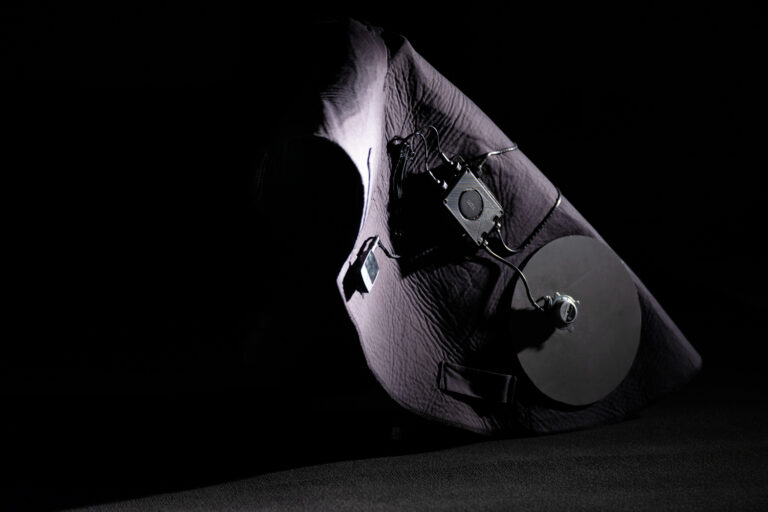
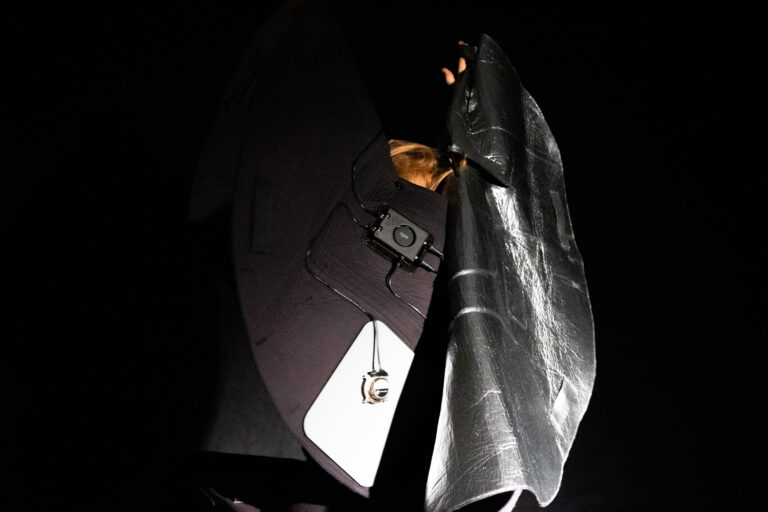
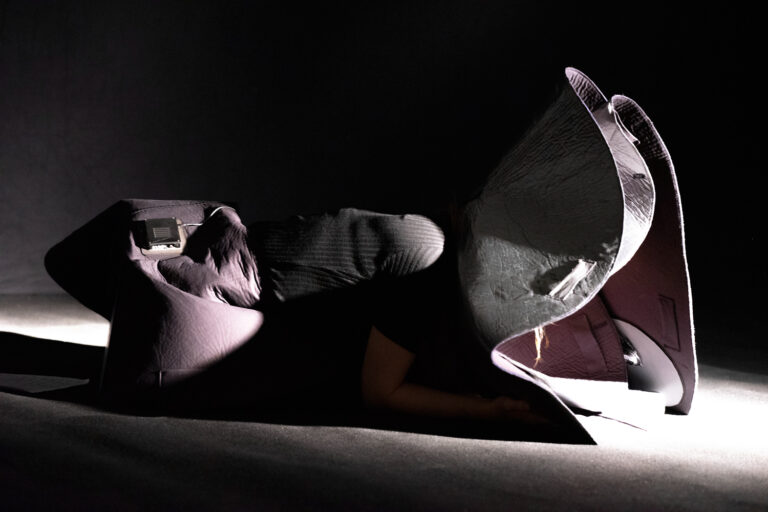
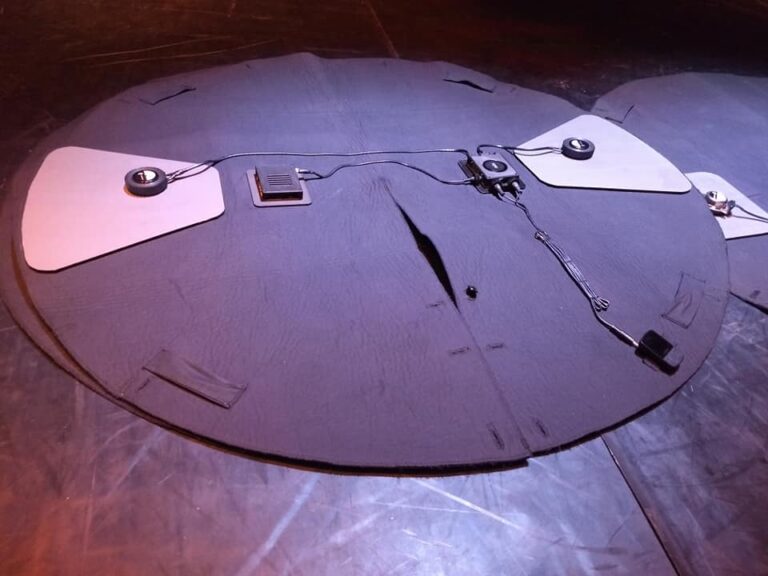
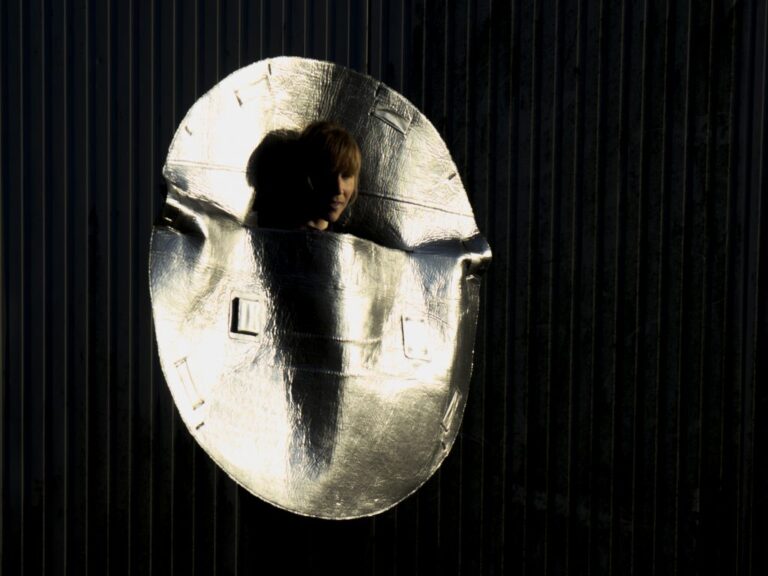
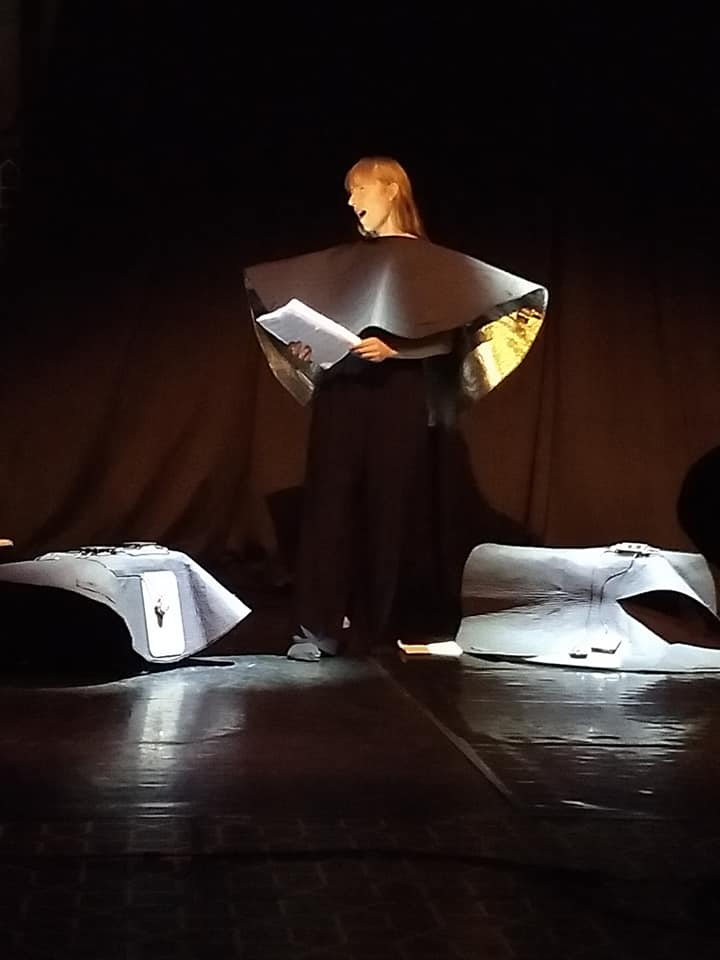
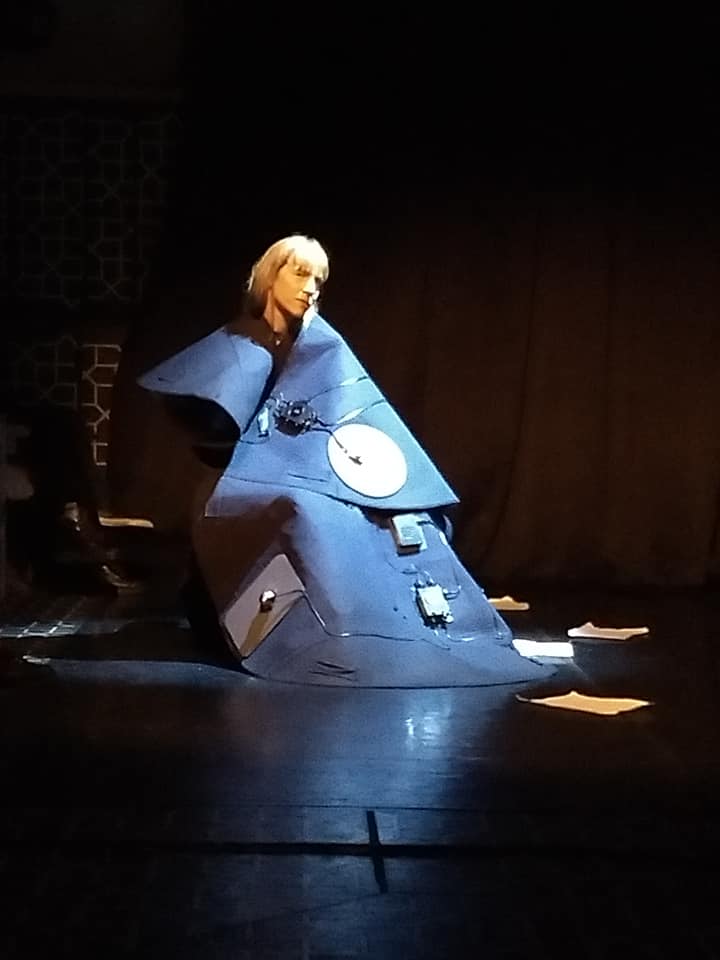
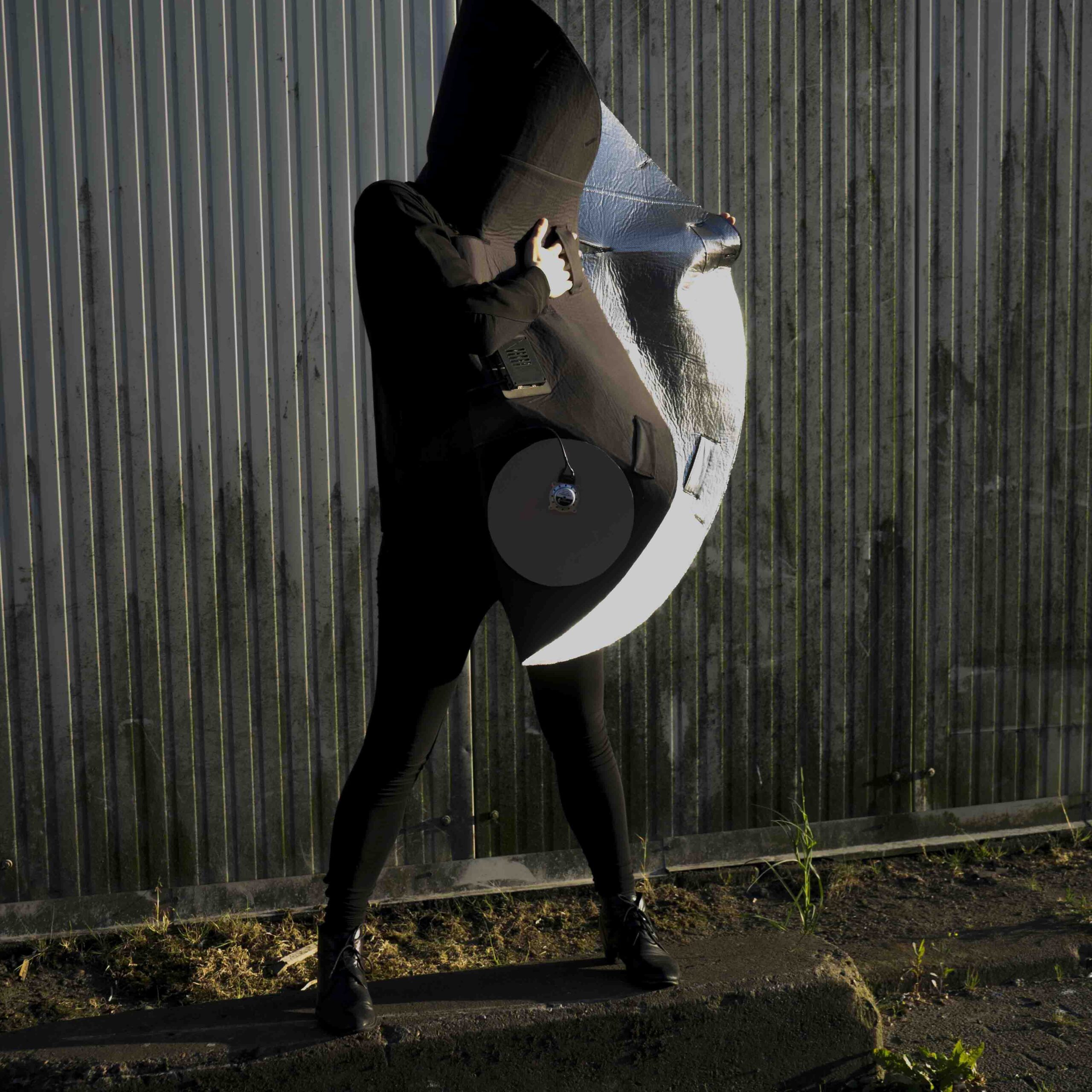
To realize this vision, Mukarno collaborated on the creation of a unique instrument: the Voice-Skin. This “wearable sound device” is a costume embedded with six speakers, designed by Jesse Howard and Arden Rzewnicki. It literally wraps the performer in sound.
The Voice-Skin challenges the traditional separation between the singer and the accompaniment. In a standard performance, the electronics usually come from black boxes hidden in the corners of the room. Here, the sound emanates from the performer’s body. As Janneke van der Putten moves, the sound moves with her, creating a dynamic, spatialized field. The electronics become a second skin, a “prosthetic” extension of the voice that amplifies, distorts, and reflects the singer’s internal state.
This fusion of body and technology is central to Mukarno’s aesthetic. It blurs the line between the organic and the mechanical, the human and the machine. The Voice-Skin acts as a cage of sound, mirroring the physical confinement of the grandfather in the camp. The singer is trapped within her own sonic output, struggling to be heard through the layers of electronic noise.
Uncompromising Aesthetics: The Grain of History
Mukarno’s approach to the text is uncompromising. He does not set the letters to a lyrical melody. Instead, he treats the words as sonic objects. He explores the “grain” of the voice—the glottal attacks, the breath, the overtones.
The “rough, unpolished sounds” that critics often note in his work are present here in the form of vocal fry, whispers, and screams. The electronics provide a harsh, industrial counterpoint, mimicking the oppressive atmosphere of the camp. There is no attempt to sweeten the experience. Mukarno wants the listener to feel the grit of history. He presents the letters not as nostalgic artifacts, but as urgent, desperate signals from the past.
This “lack of irony” is crucial. In a world where historical trauma is often commodified or sentimentalized, Mukarno treats his grandfather’s experience with absolute seriousness. The “complete absence of distance” forces the audience to confront the reality of the suffering without the safety net of artistic detachment.
The Collaboration: Janneke van der Putten
The piece is unimaginable without the specific talents of Janneke van der Putten. A specialist in extended vocal techniques, she approaches singing as a physical act. Her ability to produce two sounds simultaneously (multiphonics) and her sensitivity to acoustic space make her the ideal interpreter for Mukarno’s complex score.
Van der Putten does not just sing the piece; she inhabits it. She wanders through the space, using the architecture as a natural amplifier. Her movements dictate the direction of the sound, making the performance a unique, site-specific event. Whether performing in the Württembergischer Kunstverein in Stuttgart or the WORM in Rotterdam, she adapts the piece to the acoustic reality of the room.
This collaboration highlights Mukarno’s “Human-Centric” approach. He does not write abstract music for abstract instruments; he writes for specific human bodies. He creates a framework that allows the performer to explore their own physical limits.
The Electronic Landscape: 6 Tracks of Memory
The electronic component of Surat-Surat Perang consists of 6 tracks that envelop the listener. These tracks are not mere background ambience. They are active agents in the drama. They might represent the sounds of the camp—the distant machinery, the shouts of guards, the buzzing of insects—or the internal psychological noise of the prisoner.
Mukarno uses the electronics to fracture the voice. A phrase sung by Van der Putten might be caught by the Voice-Skin, delayed, pitch-shifted, and thrown back at her. This creates a “hall of mirrors” effect, suggesting the fragmentation of memory and identity under trauma. The electronics also serve to obscure the text, forcing the listener to strain to understand the words, mirroring the difficulty of communication in wartime.
A Ritual of Apotheosis?
The piece was featured in a project titled Apotheose (Apotheosis) in Stuttgart. The concept of apotheosis—the elevation of a mortal to a god—provides an interesting lens through which to view the work. Is the grandfather, through his suffering and his letters, being elevated? Or is the piece a critique of the way we mythologize the victims of history?
Mukarno’s music suggests a more complex reality. There is no glorious transfiguration here. There is only the stubborn persistence of the human voice against the forces of silence. The “ritual” of the performance is not one of worship, but of witnessing. The audience is asked to bear witness to the transmission of memory from the grandfather, to the composer, to the performer, and finally to them.
The Visual Dimension
The visual aspect of Surat-Surat Perang is as important as the sonic one. The Voice-Skin itself is a striking visual object—a costume that reveals its inner workings. The speakers are visible, not hidden. This transparency aligns with Mukarno’s “honest” aesthetic. He shows the machinery of sound production.
In performances, lighting often plays a key role, interacting with the textile surface of the Voice-Skin. The singer becomes a moving sculpture, a beacon of sound and light in the darkness. This multimedia approach connects the piece to Mukarno’s other works like Visual – Audible, where he explores the collision of sight and sound.
Conclusion: A Letter to the Future
Surat-Surat Perang (2020) is a profound addition to Philemon Mukarno’s body of work. It demonstrates his ability to tackle deeply personal and historical themes with artistic rigor. By combining the intimate fragility of the human voice with the cold precision of wearable technology, he creates a powerful metaphor for the persistence of humanity in the face of dehumanizing systems.
It is a work that asks: What remains of us when we are gone? Only our words, carried on the breath of others, echoing in the electronic ether.
Explore “Surat-Surat Perang,” Philemon Mukarno’s haunting work for voice and wearable electronics. A sonic journey through war letters and memory.
Concerts:
June 21 2024
Kristina Fuchs performed at Leeszaal Rotterdam West during the 2024 Dag van de Componist as part of a New Music NOW program.
November 20, 2021
Biegungen im Ausland, Ausland,
Lychener Str. 60, 10437 Berlin, Germany
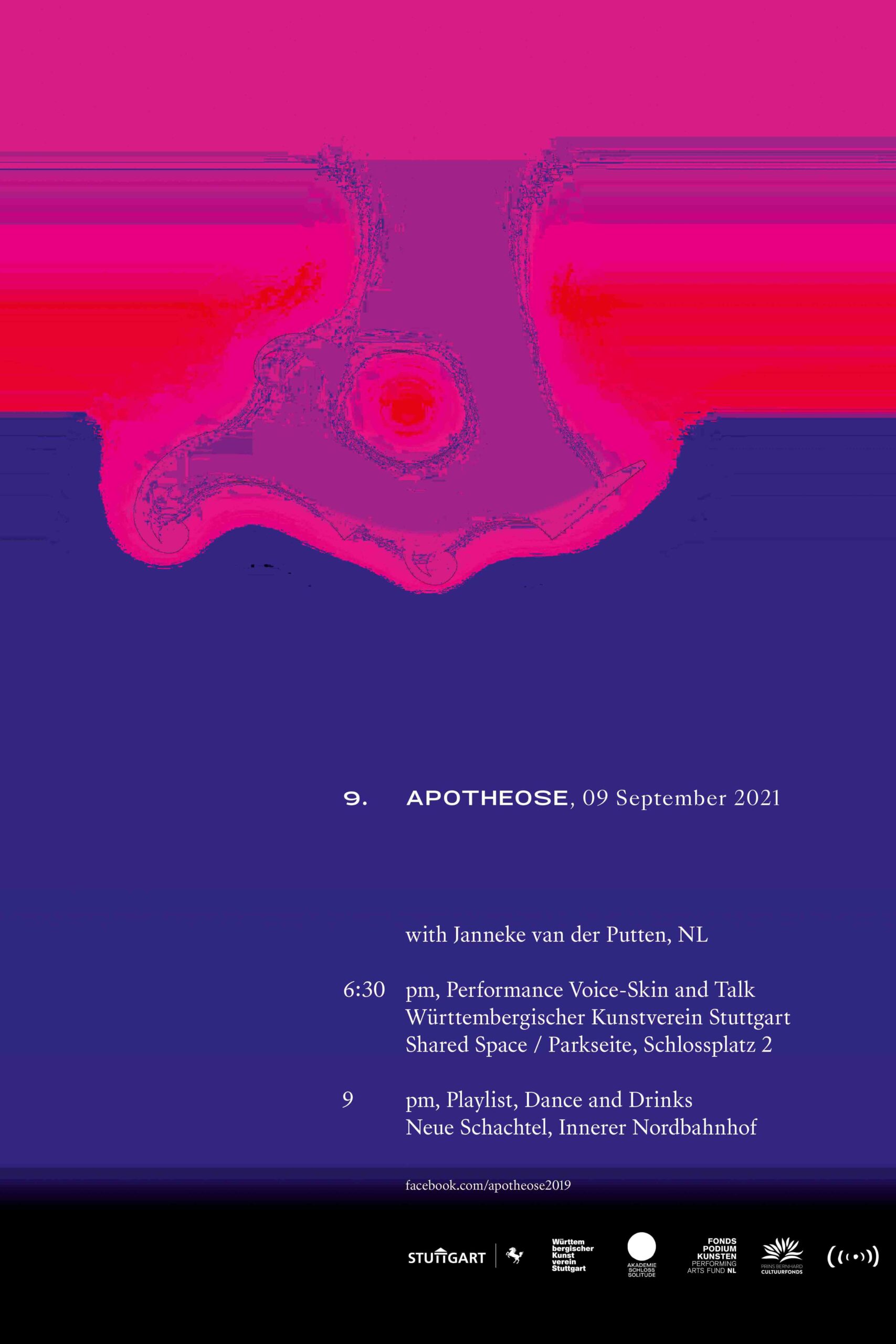
September 9, 2021, 18:30
Apotheose, Württembergische Kunstverein,
Schlossplatz 2, D-70173 Stuttgart, Germany.
hared Space #Parkseite
PERFORMANCE + TALK
Thursday, September 9, 2021, 6:30 p.m.
With Janneke van der Putten
A project by Apotheose
Registration (until September 8, 2021, binding):
apotheose@humbase.de
Janneke van der Putten is a vocal artist and visual artist living in Rotterdam (NL). In an intuitive and physical way, she explores her voice as a sound texture. She specializes in advanced vocal techniques that produce two or more sounds simultaneously: fundamental tones, overtones, interference – such as glottic attacks – and spatial reflections. Van der Putten uses the architecture as a natural sound amplifier and as a trigger for echoes or other acoustic effects. Wandering in the room sets the sound in motion and creates a dynamic listening experience. Her rhythmic and conceptual approach to singing is inspired by the cycles of the breath, the body and the earth. Their performances are often performed without electrical amplification.
Voice-Skin is a production for voice and electroacoustics, performed by Janneke van der Putten (NL), with compositions by Werner Durand (DE), Sajjra Xhrs Galarreta (PE) and Philemon Mukarno (NL). The portable sound system was created by Jesse Howard (US) & Arden Rzewnicki (US). Photography by Gabrielle Barros Martins. Made possible by Prins Bernhard Cultuurfonds, Fund for Performing Arts and Akademie Schloss Solitude. Produced by Stichting Idraola, Rotterdam, 2019-2021.
After
21:00, Playlist by Janneke van der Putten, Werner Durand and Philemon Mukarno, dance and drinks, new box, Inner North Station
Apotheosis
Apotheosis comes from ancient Greek and is translated as deification, deification. It is about the elevation of a mortal to a god or a demigod, whereby the description of a glorification or transfiguration is also used. Proper cults are formed around people who create something musical and artistic and thereby reach a public. Exceptional achievements and skills are particularly valued and experience admiration and awe. We shall refer to this process here as apotheosis. Is apotheosis the result of many years of striving for recognition or the result of the dreams and hopes of others who find a projection surface in the musicians and artists?
In an open discussion, the biographies and works of invited musicians and artists will serve as a starting point to stimulate a discussion about the apotheosis of the title and to explore the paradoxes it contains. This exchange takes place once a month in different cultural institutions in Stuttgart. This is followed by musical and artistic performances by the invited at different locations in Stuttgart. Inspired and moderated by Jan Nicola Angermann.
With heartfelt thanks to the invited musicians and artists, the support of the Stuttgart Cultural Office, SHAPE platform, Württembergischer Kunstverein, Akademie Schloss Solitude, HuM-Collective, Meckatzer and all those involved.
September 12, 2021
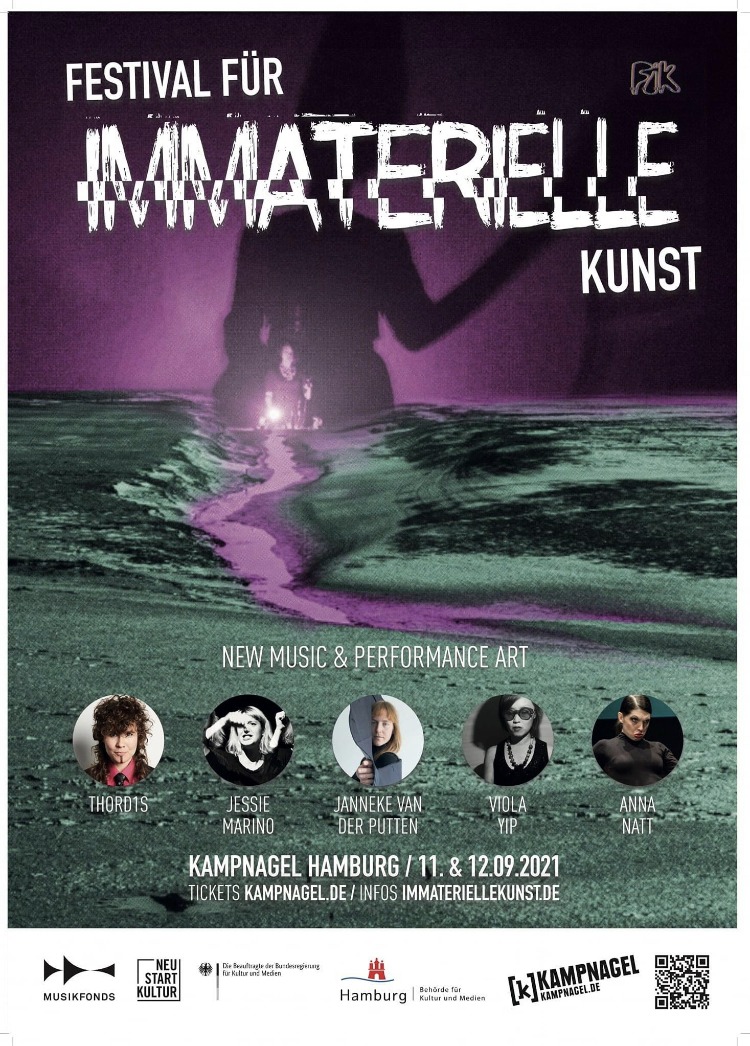
Festival für Immaterielle Kunst,
13:00-15:00 (Free of charge)
Afterward: Discussions
Kampnagel, Hamburg, Germany.
Where do contemporary music and performance cross lines? Who does this and why? Where does interpretation ‘stop’ and performance ‘start’? What are musical attempts to lean into performance art? How does performance art incorporate and use experimental music for its expressiveness? One of the main differences between contemporary music and performance art is the predetermination of things. Performance would generally be open to things happening during the happening, having an open end, while new music and composition will focus on predefine everything as far as possible. If the sound is chosen to be part of the performance art experiment it will not be composed, not previously, and not spontaneously. The aesthetic quality of the music chosen for the performance can be more experimental or more traditional, depending also on the subject and the desired expression. For half a century contemporary music has dealt with performative aspects as one topic in the composition of western classical music. In music theatre, it even has been part of it ever since. But it seems that especially in the very recent years this topic has gained a very special part in the new music concerts. This might be caused by two reasons: The more and more omnipresent visual aspect of everything we are confronted with. Presentation is key and often is connected to a special, untraditional setup and use of the physical body disconnected to the performance on the instrument. And secondly: the search for new terms of the formerly only called ‘interpret’, labels which determine him/ her from being a ‘simple’ executer to also being a creative person him / herself, however far this activity might reach.
Saturday, 11.9.2021
Concerts (20 Euros / conc. 18 Euros)
19:30 Janneke von der Putten
Sunday, 12.9.2021
13:00-15:00
Janneke van der Putten: Voice Skin
Afterward: Discussions
We can find performance artists in art universities and galleries, we find experimental musicians in music universities and concert halls. They have hardly any points of contact, and can upskill in the respectively other field only by high personal engagement. FIK wants to accelerate this a little, by providing the opportunity to peek into the other domain, into ways of thinking and working, get an idea of the used tools, but also to ask own questions. Where can I learn what, how can I built up a network? How does a musician approach sth., how a performance artist? How do they structurize, think, which tools do they use and how, where can I learn that or find more info? Dance, body, instrument, electronic, pedals, computer, props,, costume, make-up, space, light, colours, levels, video, shooting, interaction, research, backrounds, goals, collegues, network, works by others, citations, time, location, audience etcetc.
September 16, 2021 20:30
WORM,
Boomgaardsstraat 71, Rotterdam, Netherlands.
Janneke van der Putten is a vocalist and visual artist based in Rotterdam, specialized in extended vocal techniques and spatial reflections. Van der Putten uses architecture as a natural sound amplifier and as a trigger for echoes or other sonic effects. Her performance explores the possibilities of the human voice in interaction with a portable sound system, called the Voice-Skin. Unconventional vocal techniques and spatial resonances are mixed with electro-acoustic sounds emitted through loudspeakers mounted on the textile surface of the Voice-Skin.
The Voice-Skin is a performance intended to be experienced in the same physical space as where it is performed. Due to the movements of the vocalist, the direction of the sound changes constantly. In addition, the sound is enhanced by the shape of the Voice-Skin and by the architecture.
Voice-Skin is a collaboration with multiple composers and designers and the vocalist-performer. For WORM, van der Putten presents two separate performances based on pieces by Werner Durand, ‘Heart Sines’ and Philemon Mukarno, ‘Surat-Surat Perang’. Janneke will play ‘Larynx Lux’ by Sajjra Xhrs Galarreta as 3rd piece.
LIVESTREAM: YOU CAN BUY A TICKET ONLINE FOR THIS PERFORMANCE https://vimeo.com/event/1178362 (password protecteed, password on ticket).
Voice-Skin: Performance
Get an impression of the electroacoustic parts of the compositions: listen to ‘Heart Sines’ here and get an impression of the electroacoustic part of ‘Surat-Surat Perang’ here.
‘Voice-Skin #1’ is a production for voice and electro-acoustics performed by Janneke van der Putten (NL), with compositions by Werner Durand (DE), Sajjra Xhrs Galarreta (PE) and Philemon Mukarno (NL).
The portable sound system designed by Jesse Howard (US) & Arden Rzewnicki (US). Photography by Gabrielle Barros Martins (NL).
‘Voice-Skin #1’ is made possible by Prins Bernhard Cultuurfonds, Performing Arts Fund and Akademie Schloss Solitude. Produced by Stichting Idraola, Rotterdam, 2019-2021.
NOTE! Due to nature of the show, only a limited number of tickets are available for the hall: 30 maximum, sold in pairs.
Visitors can interact with the Voice-Skin suit, live, using their phones (as torch/lamp interaction) during ‘Heart Sines’.
August 14, 2021 22:00 UTC+02
Helicopter X Radio Tonka,
Beatrijsstraat 10 The Hague, Netherlands.
Doors: 20:00, Entrance: 8EUR (entrance through the blue gate)
Limited capacity so reserves your spot by sending us an email at stichtinghelicopter@gmail.com
www.helicopter.studio
Voice-skin
A sound experience for voice and (electro) acoustics A production for voice and electroacoustics performed by vocalist Janneke van der Putten(NL) with compositions by Werner Durand(DE), Chrs Galarreta (PE) and Philemon Mukarno(NL/ID). Interface-dress designed by Jesse Howard (US) & Arden Rzewnicki (US)
Documentaire Surat-Surat Perang OWTV
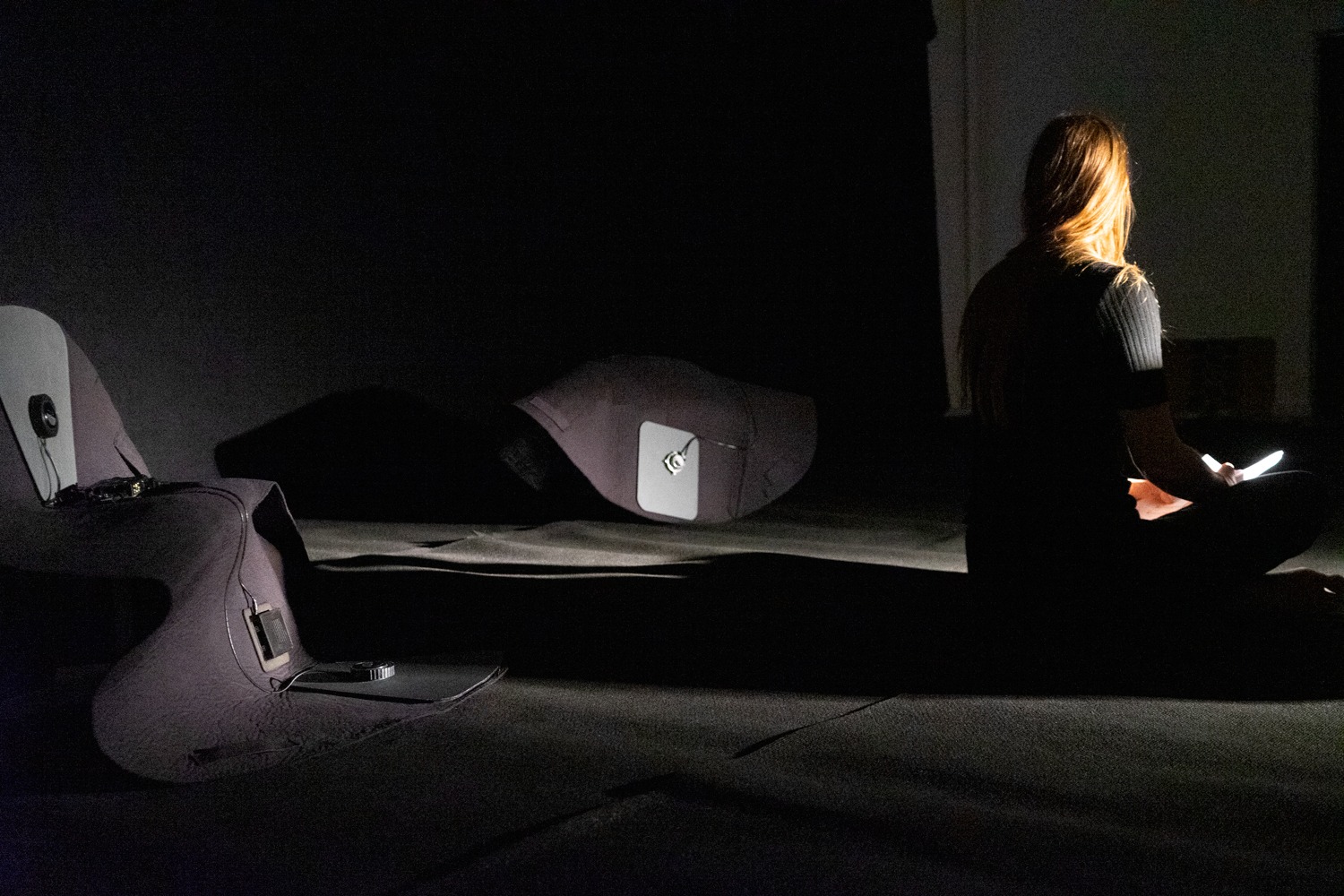

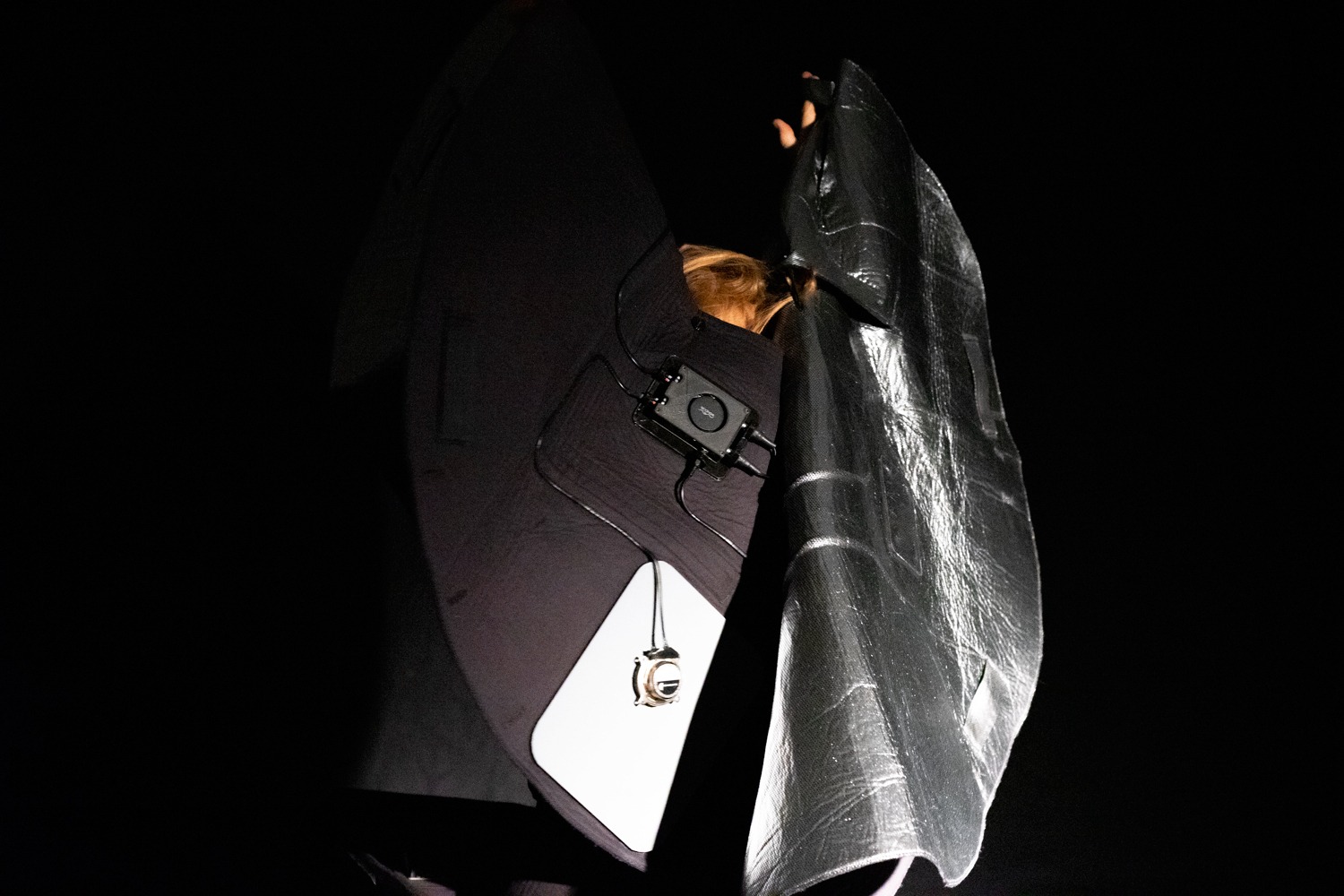
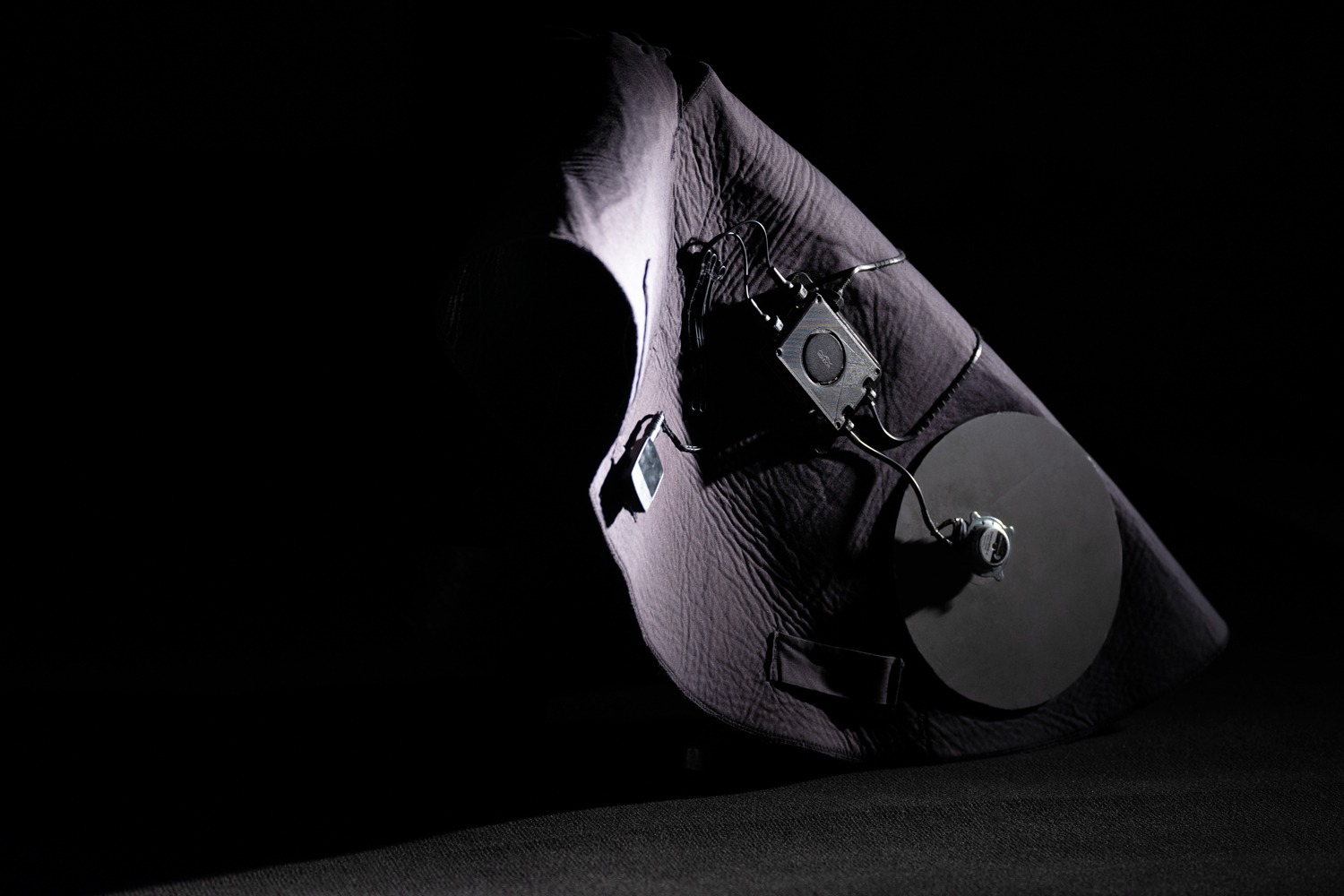


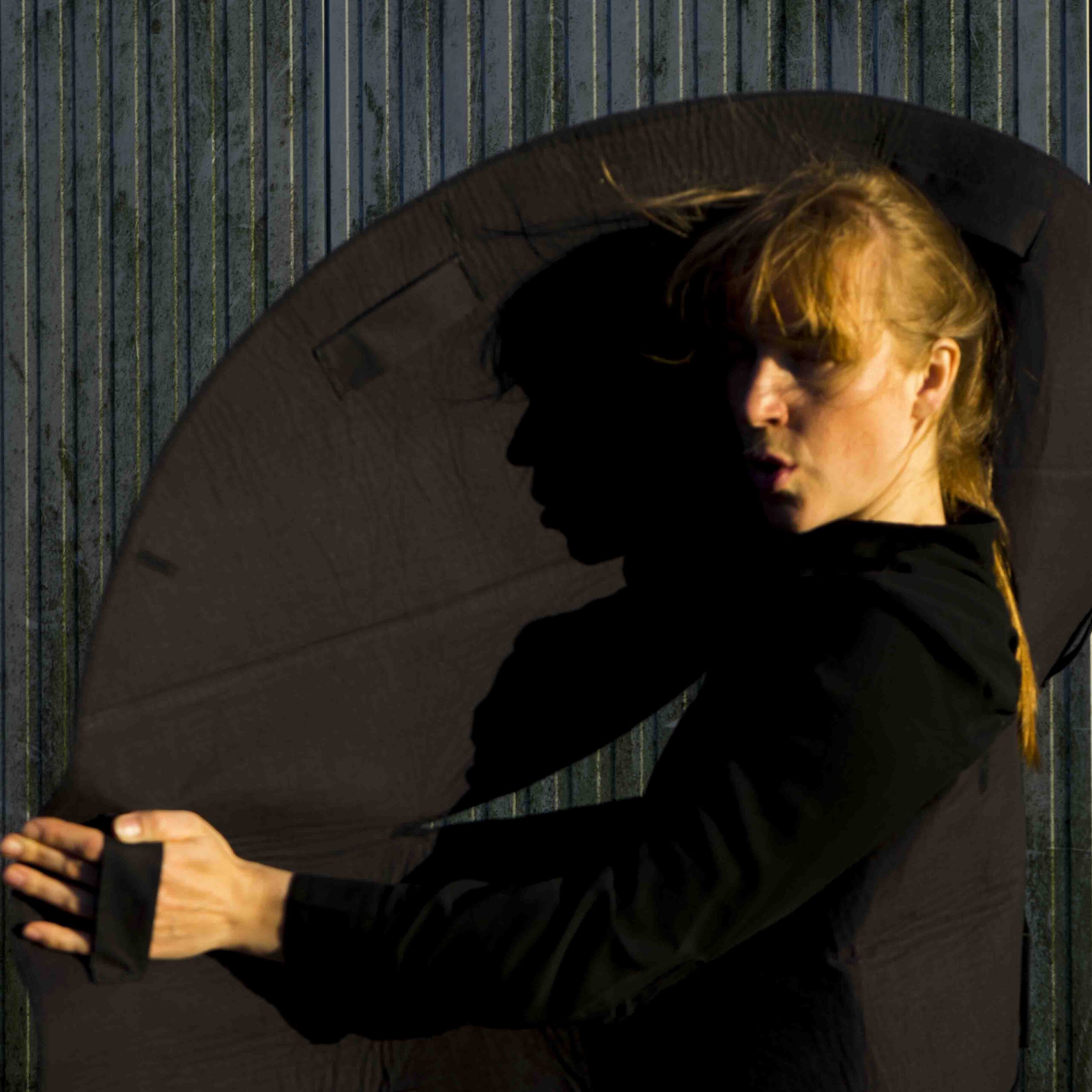
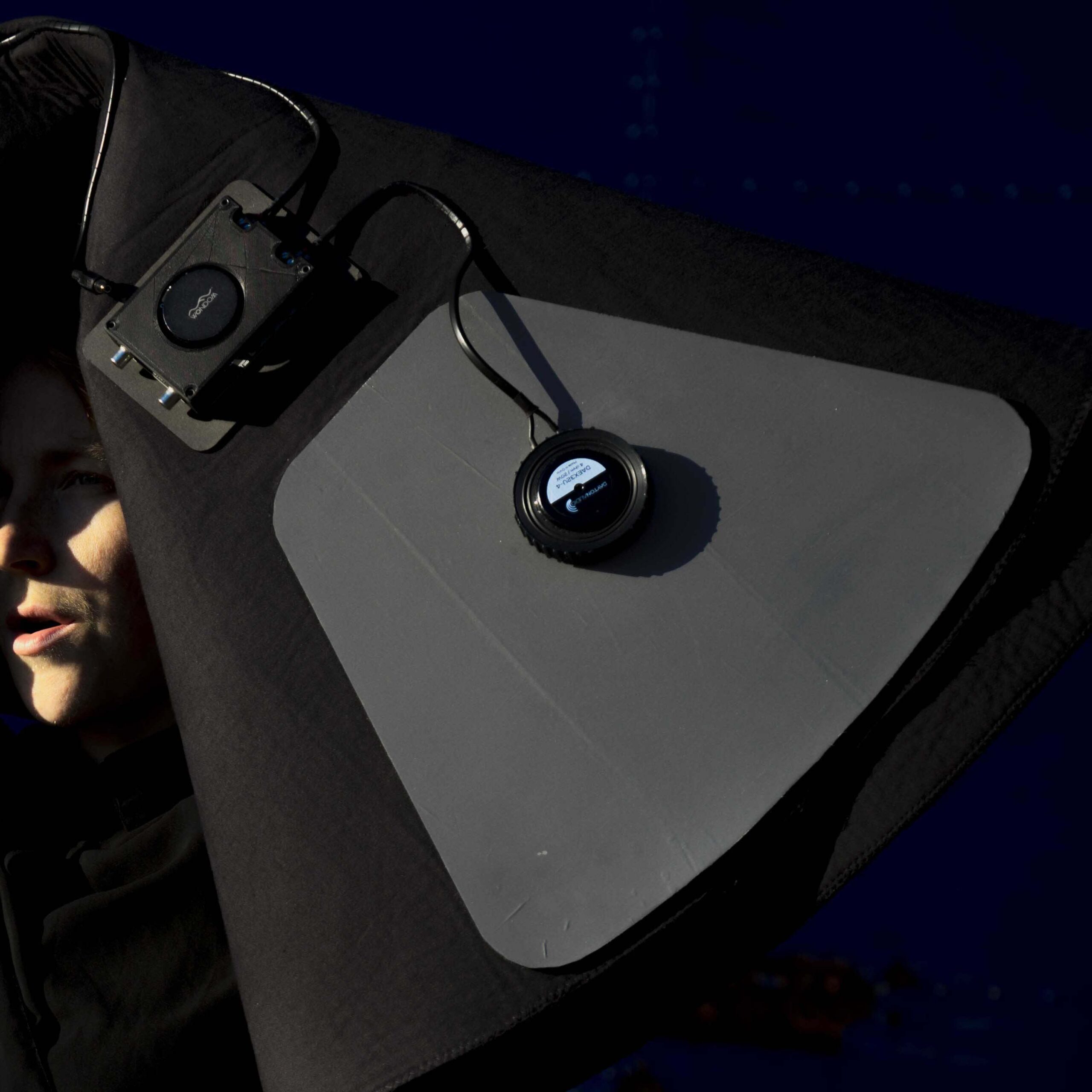
Photo credit: Gabriëlle Barros Martins
Composers
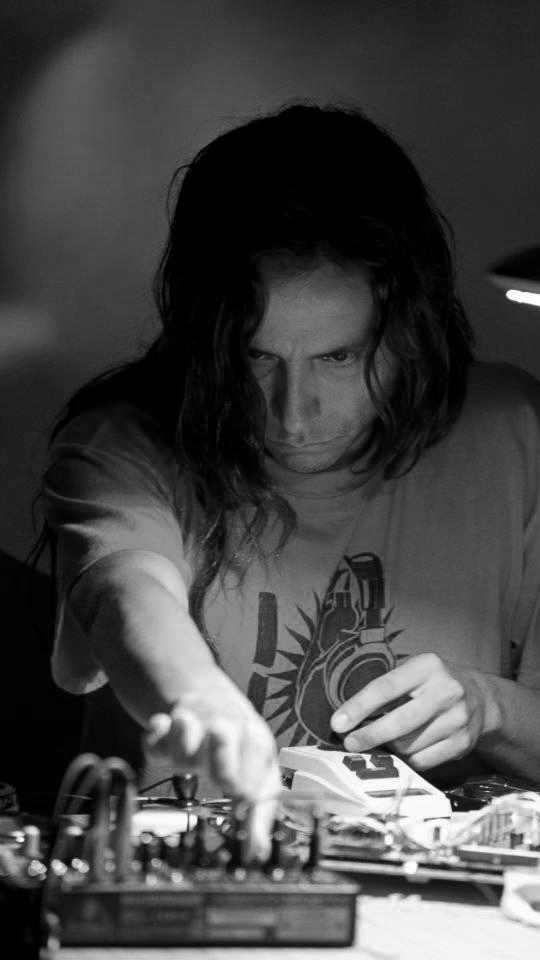
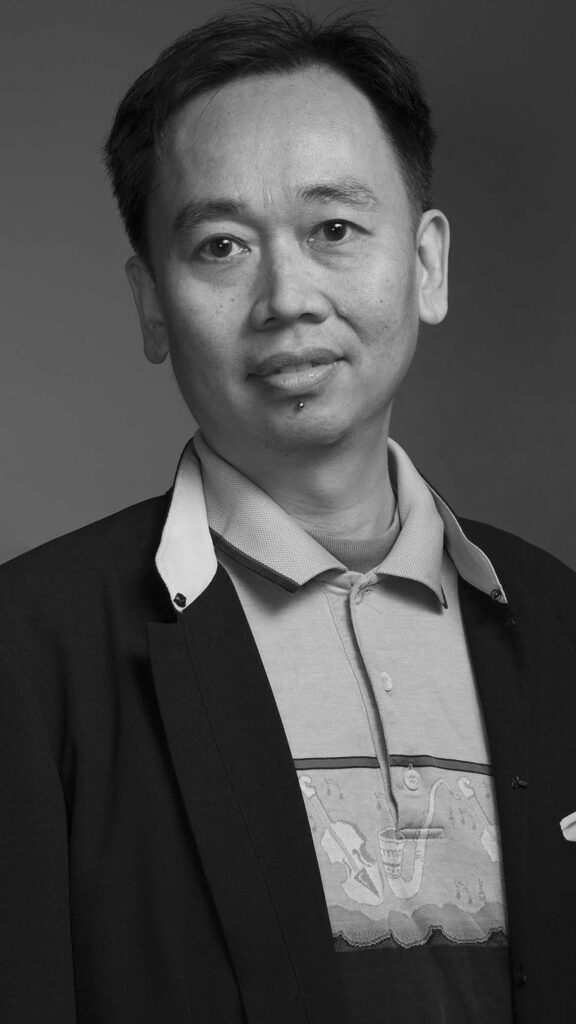
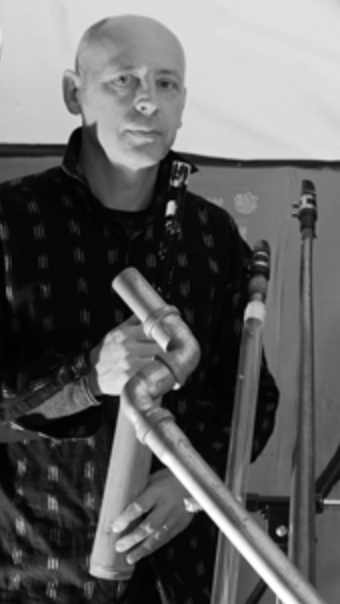
Surat-Surat Perang [2020] by Philemon Mukarno for voice and voice skin with 6 tracks electronics.
Duration: 20 min
Composed on request of and dedicated to Janneke van der Putten
With the financial support by the Performing Arts Fund NL
Concert Surat-Surat Perang in WORM
Interview Surat-Surat Perang van Philemon Mukarno [nl]
Interview Surat-Surat Perang van Philemon Mukarno [eng]