

Music
'Each piece has a strong economy of Means and a strict control of Form. Means and Form are use by Mukarno in an elementary and powerful way'
For large ensemble and electronics.
2 fl/pic, Bb cla, bcla, hrn, trp, trb, prc, pno, 2 vln, vla, vlc and electronics
Commissioned by Fonds voor de Scheppende Toonkunst
For Slendro gamelan: saron peking, saron barung, saron demung, gender panerus, gender barung, slentem, bonang panerus, bonang barung, kenong, kempul, gong sluwukan, gong ageng, rebab, cengceng, ketuk, kendang gending, kendang, ketipung, kendang, ciblon, bedug.
Commissioned by Deutschlandfunk
For marimba solo, big-band, string quartet and live electronics. b.cl, a.sx, t.sx, 2 Bb trp, tbn, b.tbn, mrb, e.gtr, pno, cb, ds, 2vln, vla, vlc and live electronics.
Syrah (2002) ’20
For chromatic gamelan ensemble and sax quartet.
soprano sax, alt sax, tenor sax, baritone sax, 2 extended saron, bonang barung, gender panerus, gender barung, kempul and gong.
Commissioned by Fonds voor de Scheppende Toonkunst.
Eya (2001) ’25
For ensemble and live electronica.
ob ,cla ,bassoon, hrn, prc, harp, gui, vl, vla, vlc, cb.
Taric (2000) ’20
For Slendro gamelan ensemble and live electronics.
Saron peking, saron barung, saron demung, gender panerus, gender barung, slentem, bonang panerus, bonang barung, kenong, kempul, gong sluwukan, gong ageng, ketuk and live electronics.
Commissioned by the Nederlandse Programma Stichting.
Artrax (2000) ’21
For ensemble.
pic/ fl, cl, b cl, trp, trb, b trb, 2 prc, pno, 2 vlc, 2 cb. Commissioned by Stichting Theater Lantaren/Venster.
Trinkx (2003) ’25
For ensemble.
pic/fl, 3 sax, hrn, 3 trp, 2 trb, btrb, pno, electicbass and live electronics.
Commissioned by Fonds voor de Scheppende Toonkunst.
String quartet
Composed for Doelen Kwartet
Commissioned by Fonds Podiumkunsten
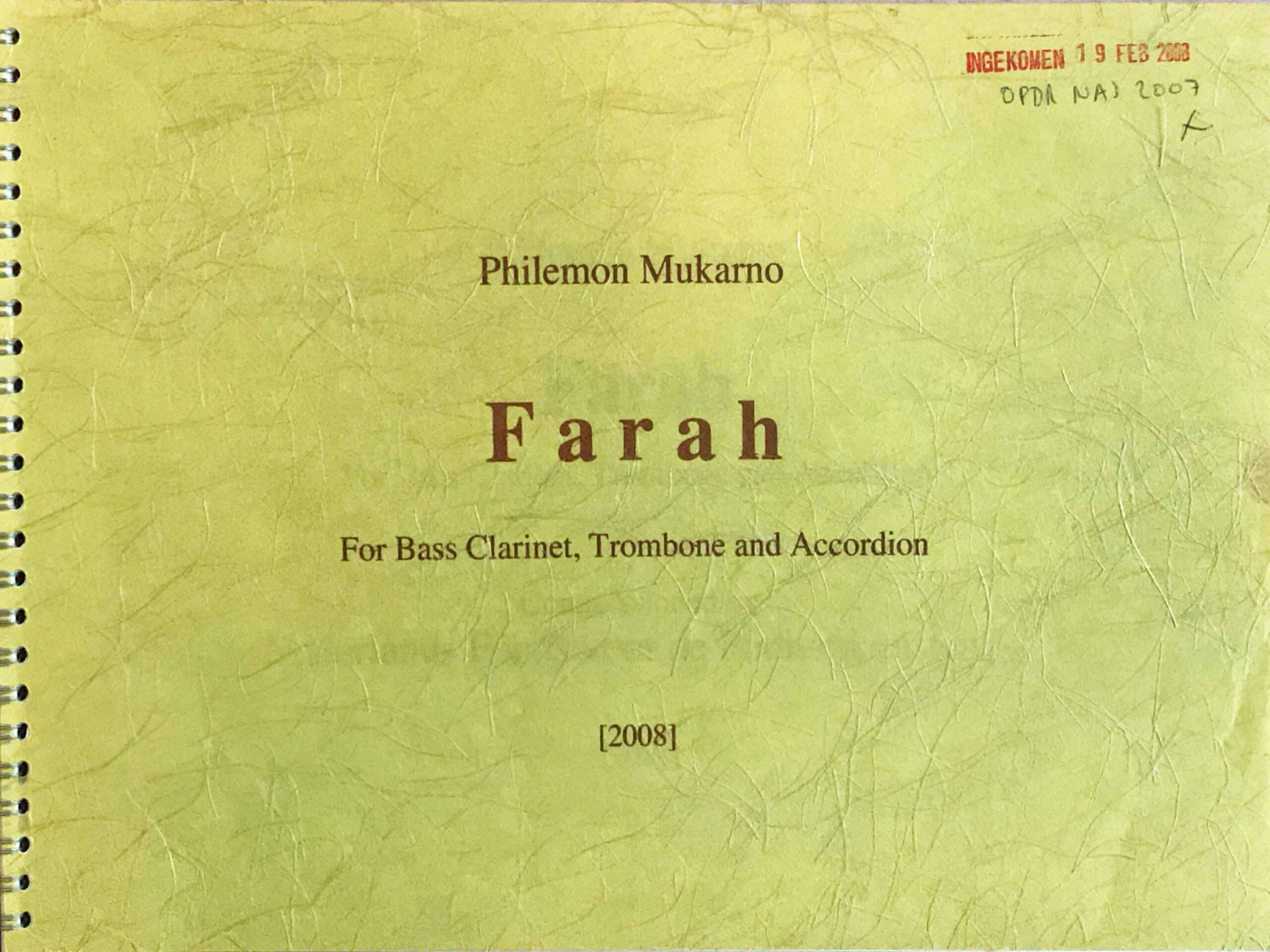
For accordion, bass clarinet and trombone.
Commissioned by Nederlands Fonds voor de Podiumkunsten +
For soprano saxophone, cello, percussion, harpsichord and electronics.
Commissioned by Fonds voor de Scheppende Toonkunst
For clarinets (Bb clarinet and contrabass clarinet), sax (alto sax and baritone sax) and piano.
Commissioned by the Flemish Government
For accordion, bass clarinet, trombone, piano and electronics
Commissioned by Filmmuseum/Filmbank
Eva & Harlot (2005) ’20
For violin, soprano, percussion, recorder/ocarina and electronics.
Commissioned by Fonds voor de Scheppende Toonkunst

Demam (2001) ’30
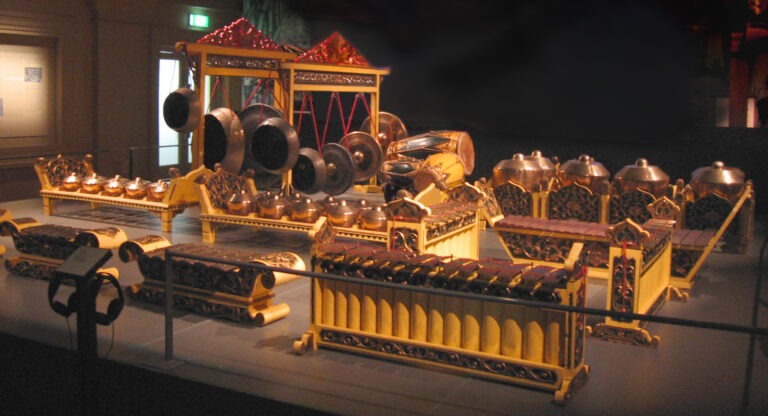
For gamelan and electronics
Commissioned by Stichting Pasar Malam Besar
Elia Demostra (2002) ’20
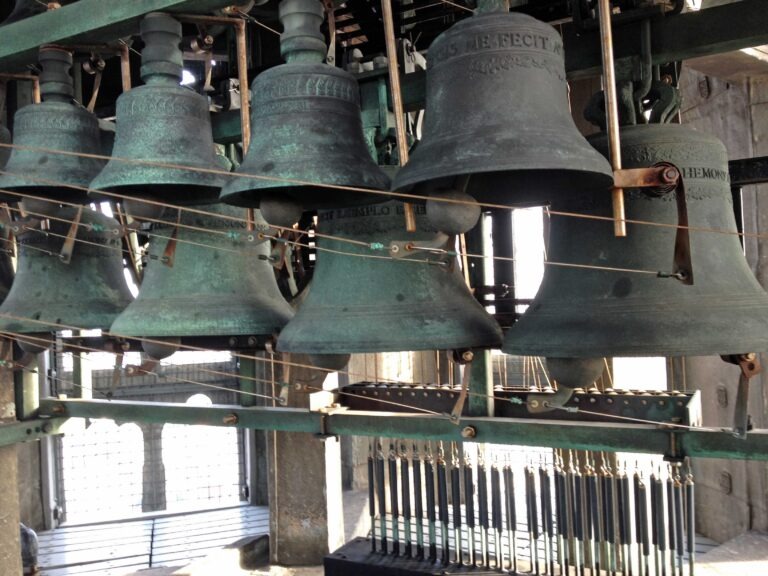
For church organ, carillon and live electronics.
Commissioned by Amsterdams Fonds voor de Kunst.

Oraye (2003) ’25
For church organ and live electronics
Commissioned by De Rotterdamse Kunststichting
For violin solo and live electronics
Commissioned by Fonds voor de Scheppende Toonkunst
Atlas non Finito (1996) ’14
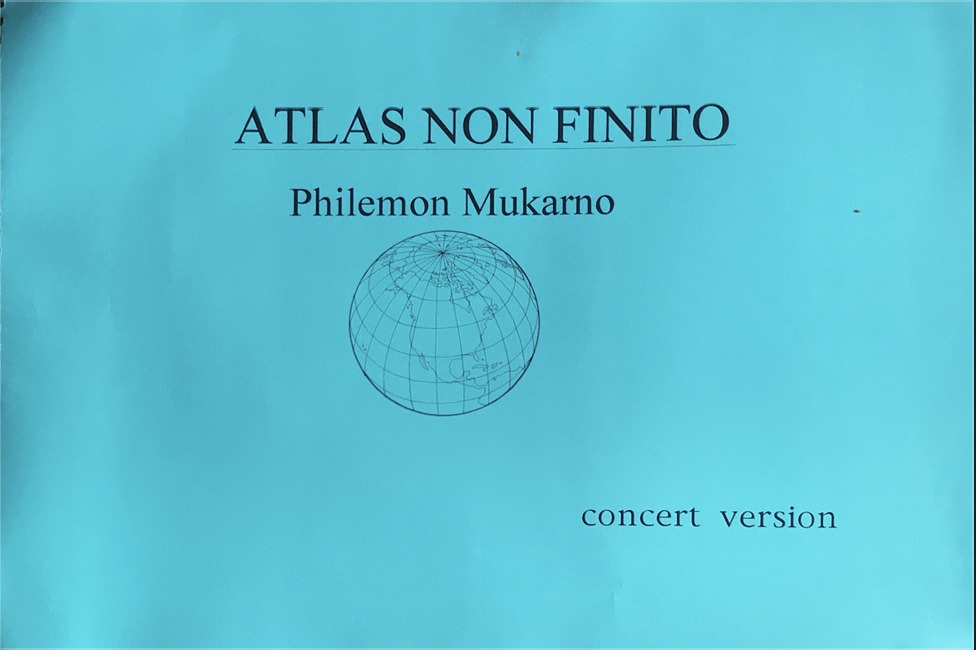
For recorders, voice en electronics
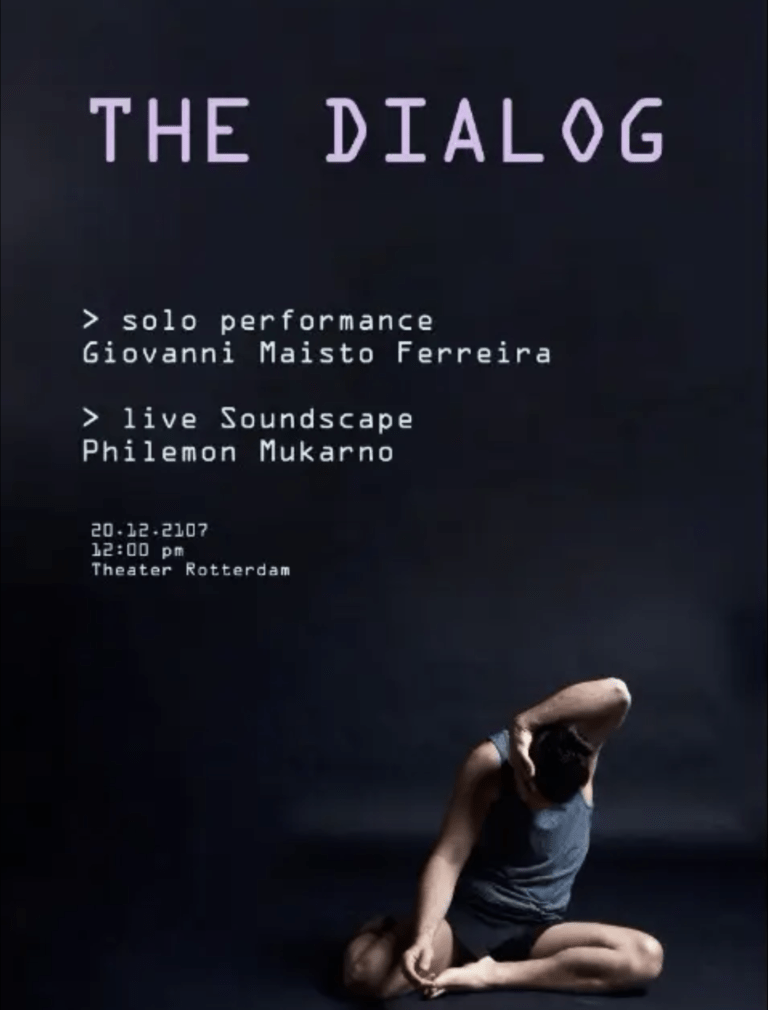
live electronic music for a dance performance of Giovanni Maisto Ferreira

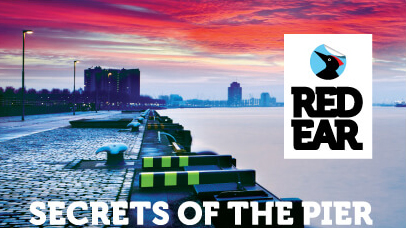
Installation Accidental Music (2013) continuous performance Soundscape for the Subway Tunnel Wilhelminaplein, Rotterdam. Commissioned by Red Ear
I guess…this means goodbye (2010) ‘6
Electric guitar, piano and electronics
Soundtrack and sound design for video of Kim Engelen Composed for Engelen Projects
Familia de los Santos (2009)
Soundtrack for ‘Familia de los Santos’ by Saul Preciado
Composed for and Commissioned by Cofradia Films
Radiophonic work
Composed for Centrum Electronische Muziek, Rotterdam and VPRO
Commissioned by Nederlands Fonds voor de Podiumkunsten +
Eva & Harlot – Soundscape (2005) ’75
Commissioned by Fonds voor de Scheppende Toonkunst
Connecting the Waves (2002) 5’00 [hour]
Multimedia (performance, sound installation)

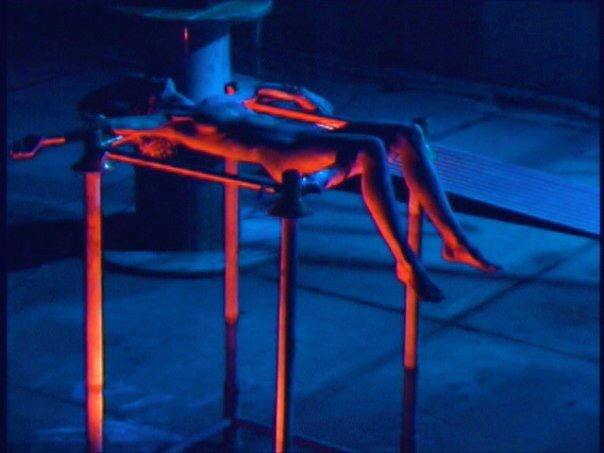
Dejeuner sur l’herbe (2000)
continuous performance
A Sound System applied to a hybrid designed metal tubes installation
Commissioned by Amsterdams Fonds voor de Kunst

Kamaloka (1999) ‘5’56
Electronic music
Music of Philemon Mukarno: The Architect of Sonic Monoliths
A Unique Figure in Contemporary Music
In the crowded landscape of modern composition, Philemon Mukarno stands apart as a singular force. Born in Indonesia and based in the Netherlands, he has carved out a niche that is entirely his own. His music is not a polite conversation with tradition; it is a confrontation with the present. Critics and peers alike describe his work as “utterly uncompromising,” characterized by a “strong sense of aesthetics” and an “individual style” that is immediately recognizable.
Mukarno’s output is vast, spanning large orchestral works, intimate chamber pieces, solo endurance tests, and multimedia installations. Yet, whether he is writing for a symphony orchestra, a Gamelan ensemble, or a single toy piano, the core of his musical identity remains consistent. He builds sonic structures that feel like ancient monuments—heavy, inevitable, and imbued with a “monolithic aura.”
Uncompromising Aesthetics: The Economy of Means
The foundation of Mukarno’s style is his rigorous “economy of means.” He does not believe in clutter. He rejects the baroque excesses that often plague contemporary music. Instead, he operates with a terrifying efficiency. Every note, every silence, and every noise has a specific structural purpose.
This does not mean his music is simple. On the contrary, it is often dense and complex. But this complexity is achieved through the manipulation of a limited set of materials. A single motif might be stretched, distorted, and exploded into a twenty-minute ritual. This “strict control of Form” gives his music a sense of inevitability. It feels as though the music could not have been written any other way. It is architecture in sound—solid, weight-bearing, and enduring.
The Rough and the Real: An Absence of Irony
A recurring theme in the analysis of Mukarno’s work is the “complete absence of irony.” In a postmodern era where art often hides behind layers of detachment, cynicism, and reference, Mukarno is radically sincere. He does not use the Gamelan to make a point about globalization. He does not use electronics to comment on the digital age. He uses them because he believes in their sonic truth.
This sincerity manifests in a preference for “rough, unpolished sounds.” He wants the listener to hear the friction of the bow, the breath of the player, and the distortion of the amplifier. He rejects the sterile, over-produced sheen of commercial music. His sound is tactile. It has grain. It feels real. This “lack of distance” creates a powerful intimacy between the work and the audience. When the music screams, it is not a performance of pain; it is the sound of pain itself.
Large Ensemble: Sculpting Massive Sound
Mukarno’s works for large ensemble demonstrate his ability to handle massive sonic forces. In “Jagat” (2006), scored for a large orchestra and electronics, he creates a world where the acoustic and the digital fight for dominance. The electronics are not a subtle backdrop; they are a subterranean rumble that shakes the foundation of the orchestra.
In “Malaikat” (2006), he turns to the Slendro Gamelan. But instead of treating it as an exotic “world music” instrument, he treats it as a machine of bronze and wood. He strips away the traditional melodies and focuses on the raw acoustics of the metallophones. The result is a piece of “acoustic futurism”—ancient instruments sounding like alien technology.
Similarly, “Magiz” (2003) for marimba solo, big band, string quartet, and live electronics is a collision of genres. Jazz brass meets classical strings and digital noise. It is a chaotic, jubilant explosion that refuses to settle into a comfortable groove.
Small Ensemble: Intensity in Miniature
Mukarno’s small ensemble works prove that intensity does not require size. “Eluney” (2013), a thirty-one-minute string quartet, is a test of endurance. Inspired by the philosophy of the Tucumán Indians, it uses the overtone series to create a shimmering, spectral texture. It demands that the quartet function as a single, breathing organism.
In “Farah” (2008), for bass clarinet, accordion, and trombone, he creates an “indescribable mass of sound” from just three instruments. The accordion acts as a synthesizer, sustaining long, wheezing chords while the winds add granular noise. The boundaries between the instruments dissolve, creating the illusion of a single “mega-instrument.”
“Domora” (2007), written for the ensemble Brooomm! (sax, cello, percussion, harpsichord), draws inspiration from the kinetic sculptures of Jean Tinguely. It is a mechanical ritual, full of rattling, scraping, and grinding sounds that mimic a machine in the process of self-destruction.
Solo Works: The Lonely Monolith
Mukarno’s solo works are perhaps his most confronting. They strip away the safety net of the ensemble, leaving the performer exposed. “Outline” (2015) for solo violin lasts a staggering one hour. It is a marathon of focus, forcing the violinist to dig deep into the instrument’s soul.
“Surat-Surat Perang” (2020) for voice and “Voice-Skin” (wearable electronics) is a haunting exploration of memory and confinement. The singer wanders the space, their voice fractured and reflected by the electronics worn on their body. It is a deeply personal work, based on his grandfather’s war letters.
Even the toy piano is treated with seriousness. “Zia” (2009) for two toy pianos transforms these children’s instruments into percussive machines, proving that Mukarno’s aesthetic can survive any medium.
Electronic Music and Multimedia: A Unified Field
Mukarno is a pioneer in the integration of electronics and multimedia. He does not see these as separate disciplines. In works like “Visual – Audible” (2008), he creates live soundtracks for experimental silent films, engaging in a “symbiosis of conflict” with the images.
His installations, such as “Secrets of the Pier” (2013), transform public spaces. For the Red Ear Festival, he filled a pedestrian tunnel in Rotterdam with continuous electronic sound, turning a commute into a surreal experience.
Works like “Iman” (2001) combine electronic music, dance, and light into a unified ritual. The dancer does not just move to the music; she is moved by it. The light does not just illuminate; it interacts with the sound frequencies. Mukarno creates a total work of art where the boundaries between the senses dissolve.
A Legacy of Truth
The compositions of Philemon Mukarno stand as a testament to the power of artistic integrity. In a world that often rewards compromise and conformity, he has remained true to his vision. He writes music that is difficult, demanding, and deeply rewarding.
He is an architect who builds with sound. He is a shaman who conjures rituals of noise and silence. He is a realist who refuses to look away from the rough edges of existence. His music is not for everyone, but for those willing to listen, it offers a profound encounter with the raw truth of sound.